
Open Concept Living Room Remodeling Ideas For Better Flow
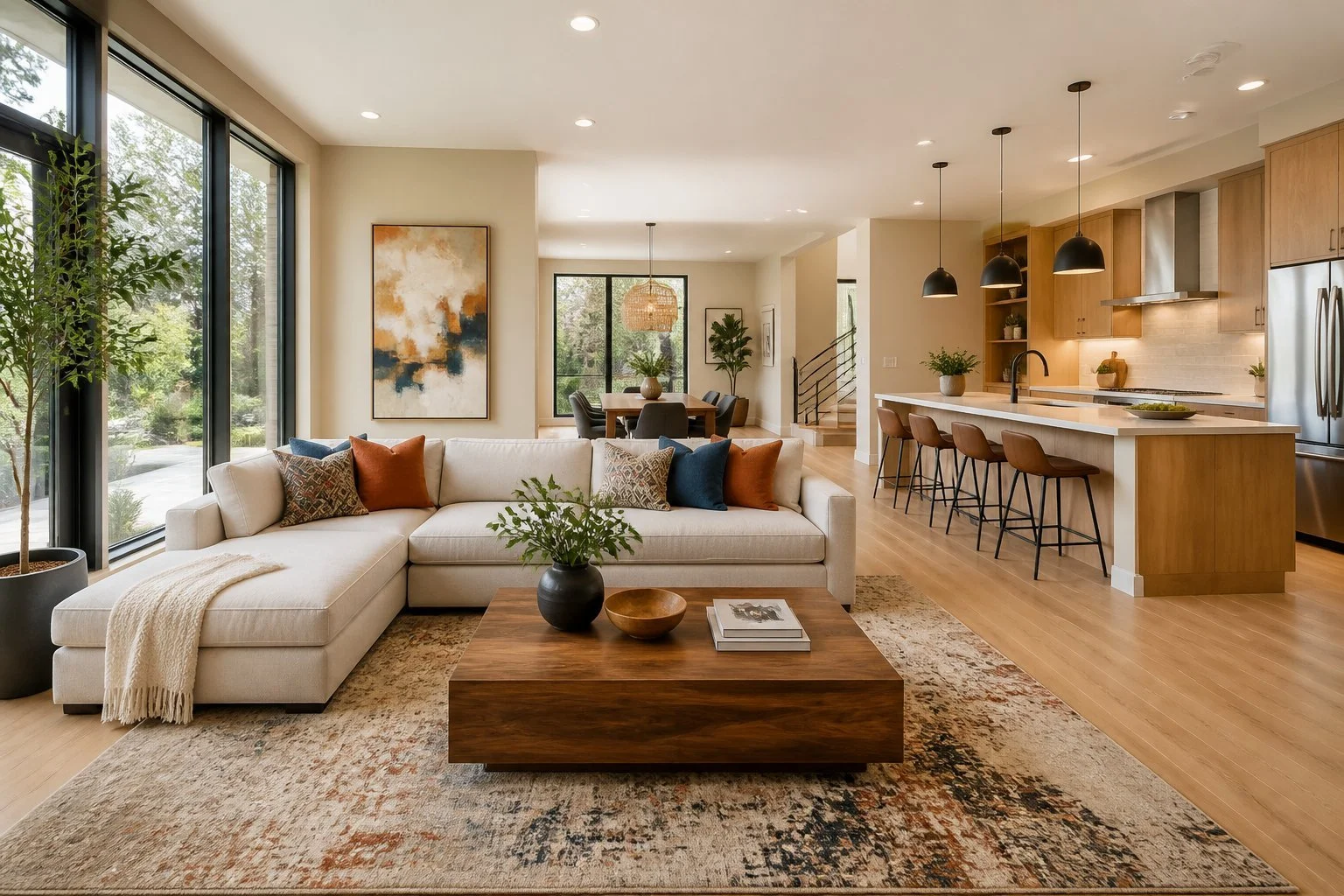
If your living room feels cut off from the rest of your home, you are not alone. Many Texas homeowners are looking at their closed floor plans and imagining something better: a space where the kitchen, dining area, and living room all connect naturally, where light moves freely and conversation flows without anyone feeling left out of the room.
An open concept living room remodel can change how your entire home feels to live in, not just how it looks. When walls come down and spaces connect, rooms feel larger, natural light reaches further, and everyday life becomes more connected. That said, getting the result right takes more than removing a wall. It takes thoughtful layout planning, cohesive design choices, and a clear look at the structural realities involved.
Whether you are working with a modest footprint or a larger home in the Houston area, these ideas will help you think through layout, architecture, finishes, and planning in a way that leads to a finished space you will actually want to live in.
Key Takeaways
Smart furniture placement and zone planning are what make an open layout feel intentional rather than empty.
Cohesive finishes, layered lighting, and continuous flooring are what visually tie connected spaces together.
Structural checks, permits, and proper contractor coordination are essential steps before any walls come down.
Layout Ideas That Make Open Spaces Feel Intentional
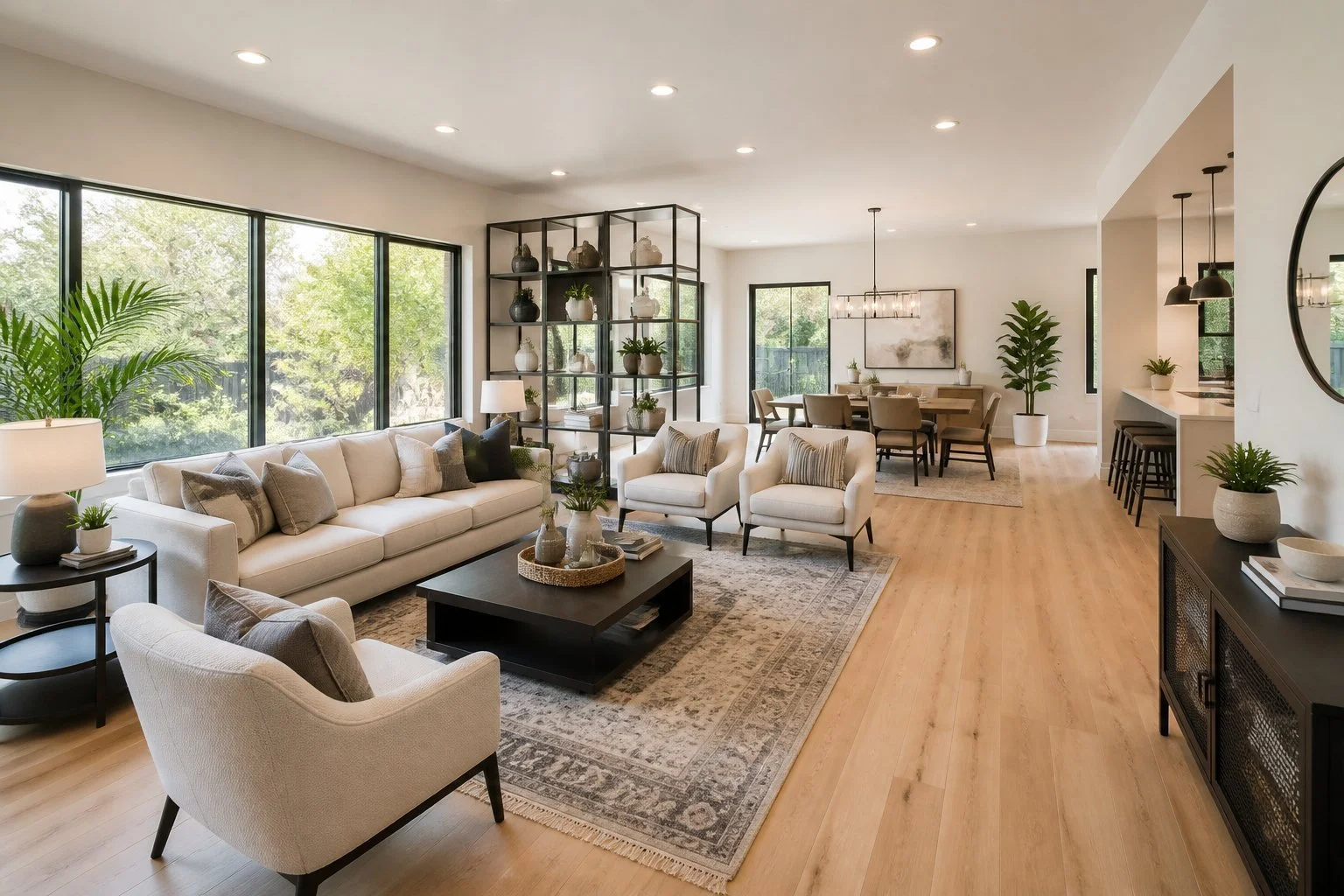
The biggest mistake in open concept design is treating the combined space as one giant room with no structure. Good layout work uses furniture, rugs, and sightlines to give each zone its own purpose while keeping everything connected.
Use Furniture Placement To Define Zones
You do not need walls to separate your living area from your dining space. A well placed sectional or sofa facing away from the kitchen creates a clear boundary for the seating zone. An area rug underneath anchors the grouping visually.
Floating furniture, meaning pieces pulled away from walls rather than pushed against them, is one of the most practical moves in a minimalist open concept living room. It creates breathing room and makes the layout feel curated. Modern furniture with clean lines tends to work best here because it does not visually clutter the space.
Create Better Sightlines Between Living, Dining, And Kitchen Areas
When you plan an open concept living room, think about what you see from every angle. Standing at the kitchen counter, you want to see into the living area without obstruction. Seated on the sofa, the dining table should feel like a natural extension of the same space rather than a separate zone crammed in at the edge.
Multi functional furniture helps here. A kitchen island with seating can serve as a visual anchor between zones. A console table behind the sofa doubles as a visual divider and a surface for lamps or decor.
Plan For Conversation, Circulation, And Everyday Function
A modern open concept layout needs clear traffic paths. Aim for at least 36 inches of walkable clearance between furniture groupings and main paths. Seating should face toward one another rather than all pointing at a screen, especially in social spaces.
Think about how your family actually moves through the space during a typical day. Cooking, helping with homework, watching television, and entertaining guests can all happen in the same visual space, so your layout needs to support all of it without feeling cramped or accidental.
Architectural Features That Add Character Without Closing Off The Room
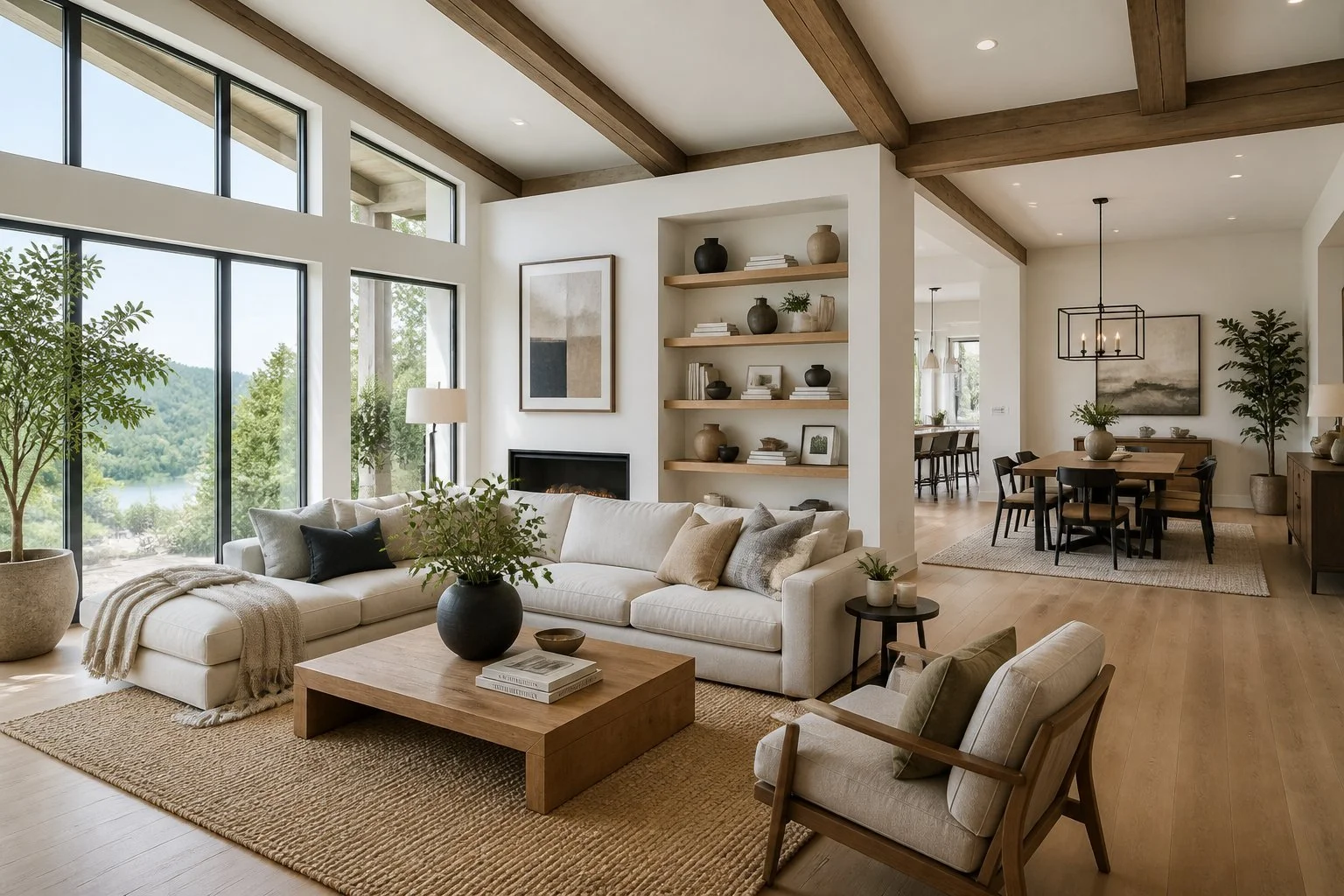
The right architectural details do a lot of work in an open layout. They create visual interest, define areas, and give a large connected space the kind of character that keeps it from feeling like an empty box.
Vaulted Ceilings, Exposed Beams, And Structural Drama
Vaulted ceilings are one of the most requested features in open concept remodels, and for good reason. They amplify the sense of space and draw the eye upward, making even a modest square footage feel expansive. When combined with exposed beams, whether structural or decorative, they add warmth and texture that a flat ceiling simply cannot match.
If your existing ceiling height is already generous, exposing or adding beams can bring a sense of scale that ties the living, dining, and kitchen zones together visually without adding any physical division.
Built Ins, Media Walls, And Fireplace Focal Points
A built in shelving unit or media wall gives a large open room something to anchor to. It creates a clear focal point for the living zone and adds practical storage without the visual bulk of freestanding furniture.
A stone fireplace works similarly. Placed on a shared wall between the living and dining areas, it draws attention and creates a natural center for the room. Even in Houston, where winters are mild, a fireplace adds a design element that makes a space feel intentional and grounded.
Glass Dividers And Indoor Outdoor Connections
Glass dividers are a smart tool when you want some separation without losing light or sightlines. They define a space visually while keeping the open feel intact. Floor to ceiling windows and sliding glass doors that connect to a patio or summer kitchen take this idea further, blurring the line between indoor and outdoor living in a way that feels especially natural in the Texas climate.
Design Choices That Create A Cohesive Look
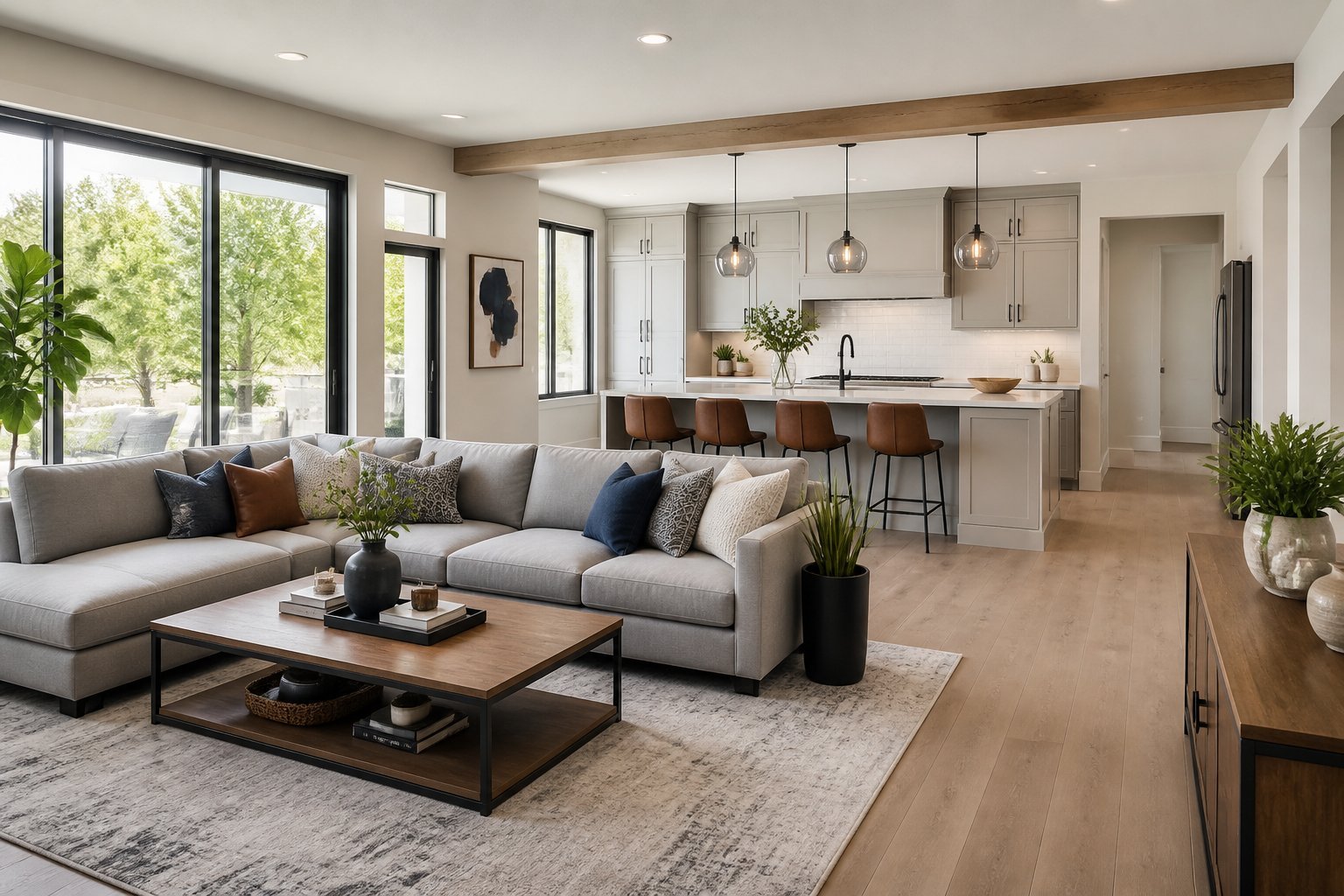
When multiple rooms share one visual field, every finish choice you make in one zone affects how the others read. Cohesion comes from consistent decisions across color, light, and materials rather than matching everything exactly.
Choose A Neutral Color Palette With Layered Textures
A neutral color palette is one of the most reliable tools for making a connected space feel calm and intentional. Soft whites, warm beiges, and greige tones let the architecture and furniture do the talking without competing for attention. This approach works in both small and large open plans.
Layered textures keep a neutral palette from feeling flat. Think linen upholstery, a jute rug, matte tile, and brushed metal finishes used together. In a modern farmhouse or transitional open concept, mixing matte and natural textures creates visual depth without introducing more color or pattern.
Use Layered Lighting To Shape Mood And Function
Layered lighting is essential in an open layout because a single overhead fixture cannot do the job alone. You need ambient light for general illumination, task lighting over work surfaces, and accent lighting to highlight architectural features or artwork.
Statement lighting, like a large pendant light over the dining table or island, does double duty. It provides focused task light and creates a visual anchor for that zone of the room. Varying fixture styles while keeping finishes consistent is a good way to maintain cohesion without making every light look identical.
Carry Flooring And Finishes Across Connected Areas
Continuous flooring is one of the most effective ways to unify an open concept space. Running the same herringbone wood floor or large format tile from the kitchen through the dining and living areas removes the visual interruption that different materials create.
Where transitions are unavoidable, keep them minimal and intentional. Matching grout tones to tile, or choosing a wood tone that complements your cabinetry, carries the eye through the space naturally. Consistent finish choices in hardware, plumbing fixtures, and trim work also help the whole layout read as one considered design rather than a collection of separate rooms.
Remodel Planning Before You Remove Walls
Opening up a floor plan is one of the more complex residential remodeling projects you can take on. The design vision is usually clear, but the structural and mechanical work behind the walls requires real expertise before a single board comes down.
Check Structure, Mechanical Systems, And Code Requirements
Before your remodel begins, every wall targeted for removal needs to be evaluated for whether it is load bearing. A load bearing wall cannot simply be taken out. It requires a properly sized beam and adequate support posts to transfer the load safely. Skipping this step creates serious structural risk.
Beyond structure, walls often contain electrical wiring, plumbing lines, and HVAC ducts. Each of those systems needs to be rerouted by licensed trades as part of the project. Local building codes in the Houston area also require permits for structural work, so any reputable contractor should pull the appropriate permits before starting.
Balance Budget, Timeline, And Project Scope
Mid range open concept remodels in the Houston area typically fall in the $25,000 to $75,000 range and take roughly 6 to 10 weeks to complete. Larger whole home reconfigurations that involve significant structural changes, new mechanical routing, and full finish upgrades can exceed $100,000 and run 3 to 6 months or more.
Being realistic about scope from the start helps you avoid mid project surprises. An itemized estimate from your contractor will show you exactly where the budget is going and where adjustments can be made without compromising the result.
Work With A Contractor Who Can Manage The Whole Process
An open concept remodel touches framing, electrical, plumbing, HVAC, drywall, flooring, and finish carpentry, often all in the same project. Working with a contractor who coordinates all of those trades keeps the timeline from falling apart and ensures that structural decisions are made correctly.
Home Renovations and Remodeling, based in Spring, Texas, manages projects like this from consultation through final walkthrough. If you are ready to talk through your layout ideas, you can call (281) 740-7118 to schedule a free in home consultation.
Frequently Asked Questions
How can I create distinct zones in an open living, dining, and kitchen area?
Area rugs, furniture placement, and lighting fixtures are the most effective tools for zone definition without walls. A rug under the seating group, a pendant light over the dining table, and a kitchen island with seating each signal a different zone visually. You do not need physical barriers for the separation to feel real.
What are the best furniture layout options for a small open plan living room?
In a smaller open layout, floating furniture away from walls and choosing pieces with legs rather than solid bases helps the room feel less crowded. A compact sectional or a sofa paired with two chairs in an L shape tends to define the seating zone clearly without taking over the space. Avoid oversized pieces that block sightlines.
How do I choose lighting to define spaces in an open concept layout?
Each zone in your open layout should have its own lighting anchor. A statement pendant or chandelier over the dining area and a floor lamp or recessed cluster over the seating zone each signal that a distinct area is happening there. Keeping all fixtures in the same metal finish ties them together visually.
What flooring choices work best for a continuous open plan living area?
Large format tile and wide plank hardwood are both popular choices for continuous open plan flooring because they minimize seams and read as one uninterrupted surface. Engineered hardwood is a practical pick in Texas because it handles humidity better than solid wood. Carrying the same material throughout the kitchen, dining, and living zones creates the strongest visual flow.
How can I reduce noise and improve acoustics in an open living space?
Soft furnishings are your best tool for managing sound in an open layout. Layered rugs, upholstered seating, curtains, and cushions all absorb sound that would otherwise bounce off hard surfaces. If noise is a significant concern, your contractor can also explore insulation or acoustic treatment options during the remodel phase.
What design trends are replacing fully open concept floor plans?
Some homeowners are moving toward a connected but not fully open approach, using partial walls, glass dividers, built in shelving, or strategic furniture to create softer separations between zones. This gives you the light and flow of an open layout while adding some acoustic and visual definition. The goal is flexibility rather than a single rigid format.