
Small Bathroom Remodeling Ideas for Houston Homes
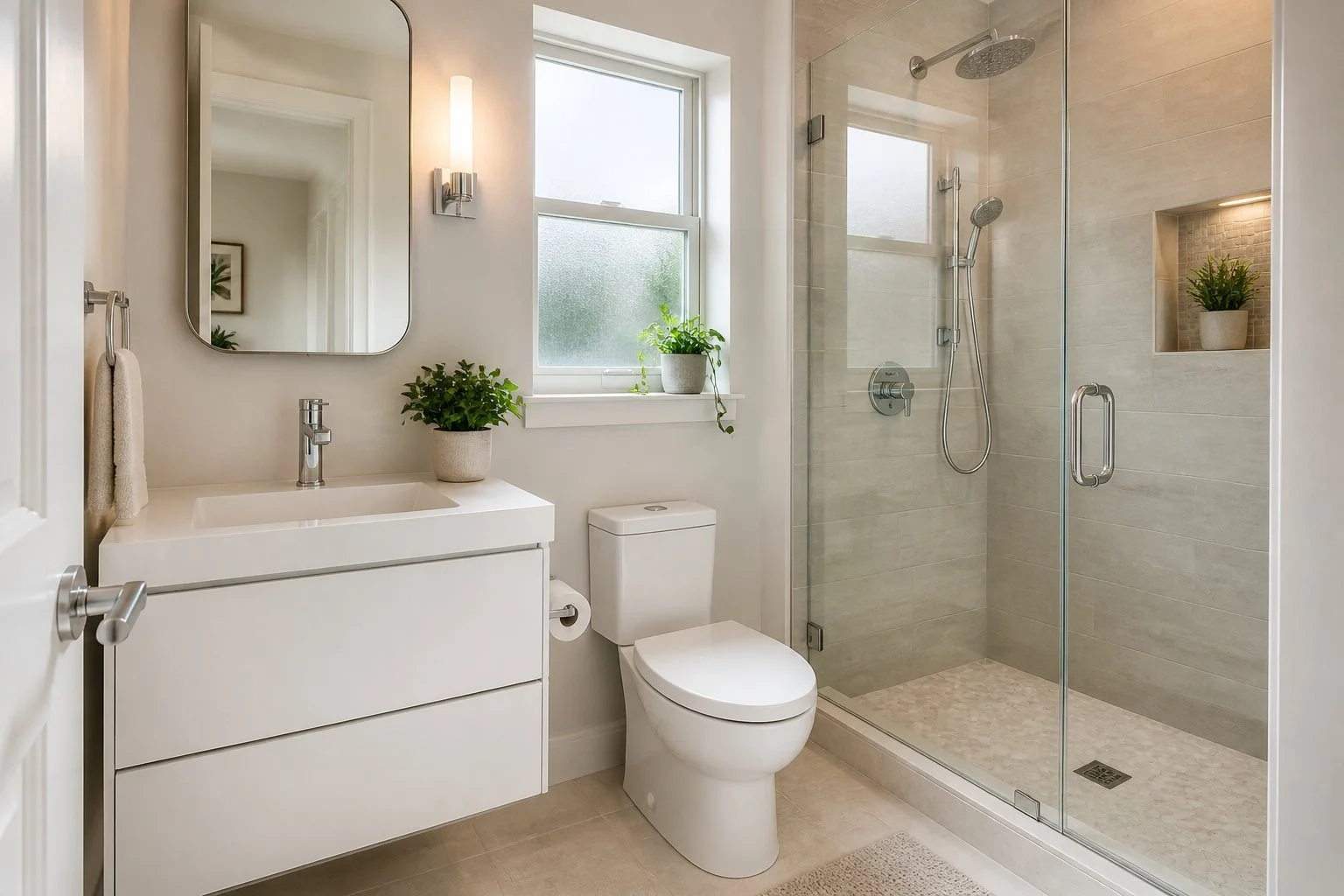
Small bathrooms are one of the most common renovation challenges for Houston homeowners. Whether you're working with a 5x8 guest bath or a compact primary bathroom in a townhome, the goal is the same: make the most of every square foot without the space feeling crowded or dark.
The good news is that smart layout choices, the right fixtures, and a few well-chosen finishes can completely transform how a small bathroom looks and functions.
Houston's climate adds a specific layer to the planning process. High humidity means materials matter, and ventilation is not optional. Choosing finishes that can handle heat and moisture while still looking polished is part of what separates a lasting remodel from one that needs repairs within a few years.
This article walks through practical ideas that work specifically for Houston homes, from layout planning to material selection to what to expect budget-wise.
Key Takeaways
Choosing the right layout for your square footage is the single most impactful decision in a small bathroom remodel.
Wall-mounted and recessed storage options free up visual space without sacrificing function.
Houston's humidity makes moisture-resistant materials a must, not just a preference.
Start With the Right Layout
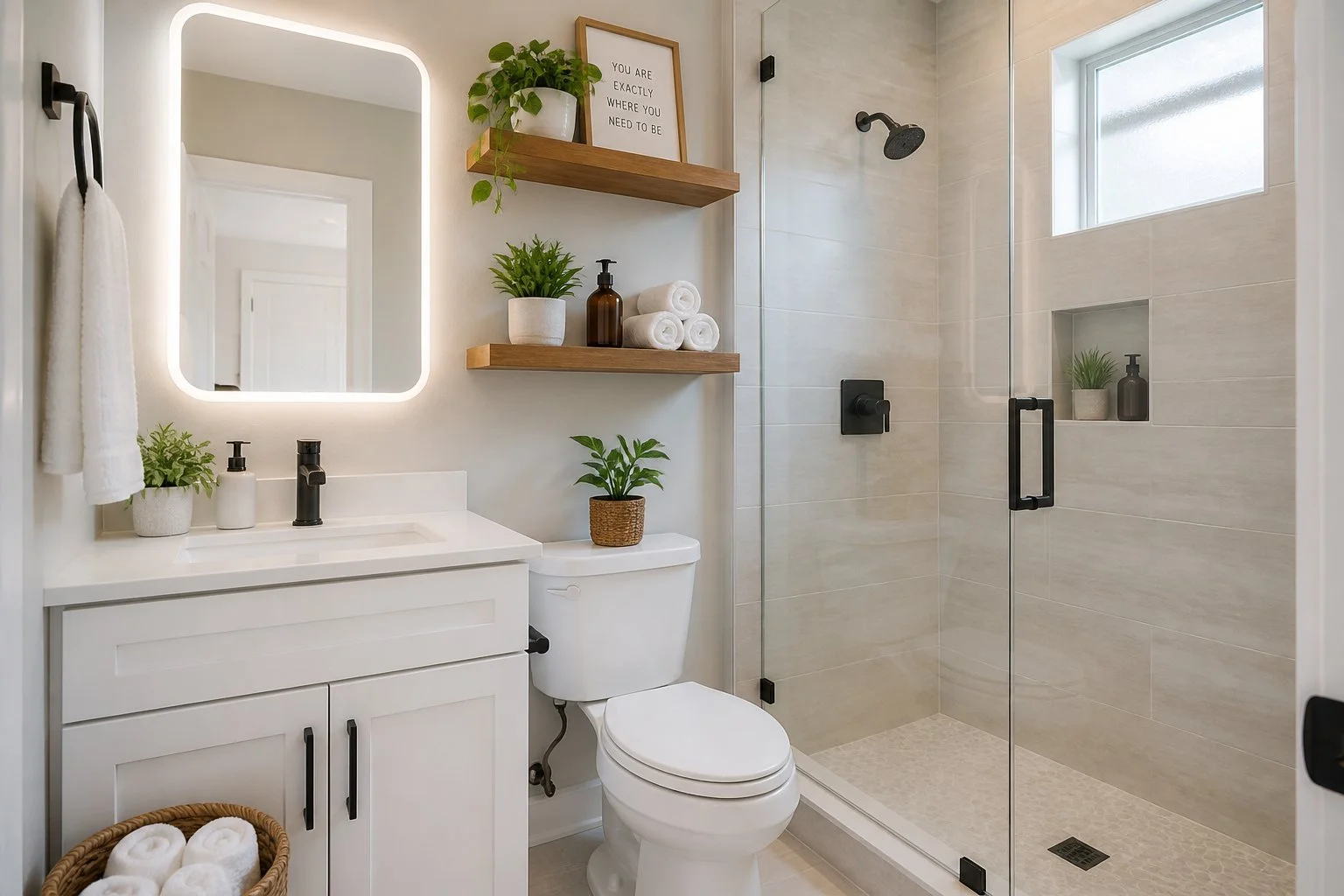
Layout is where every successful small bathroom remodel begins. Decisions about fixture placement, door swing, and shower configuration determine how much usable space you actually end up with.
How to Plan a Functional 5x8 Bathroom
The 5x8 bathroom is one of the most common small bathroom layouts in Houston homes, and it works well when planned carefully. The standard approach places the toilet against one short wall, the vanity along the long wall, and a tub or shower at the far end.
If your current layout already follows this pattern, your biggest wins will come from fixture upgrades and storage rather than a full reconfiguration. Reconfiguring plumbing lines adds cost fast, so stick with the existing footprint when you can.
When a Walk In Shower Makes More Sense Than a Tub
Replacing a rarely used tub with a walk in shower is one of the most popular moves in small bathroom remodeling, and for good reason. A well-designed walk in shower with a frameless glass enclosure opens the sightline across the room, which makes the space feel noticeably larger.
If your home has at least one bathtub elsewhere, removing the tub in a secondary bath is a practical choice. Most Houston buyers and appraisers view this trade-off as neutral to positive when the shower is well finished.
Space Saving Moves Like Corner Showers and Pocket Doors
A corner shower is worth considering when the existing layout leaves an awkward amount of floor space. Positioning the shower in a corner frees up wall space for storage or a slightly larger vanity.
Pocket doors are another practical upgrade that homeowners often overlook. A standard hinged door eats into floor space every time it swings open. Pocket doors slide into the wall and keep that area clear, which matters a lot in a bathroom under 50 square feet.
Choose Fixtures and Storage That Open Up the Room
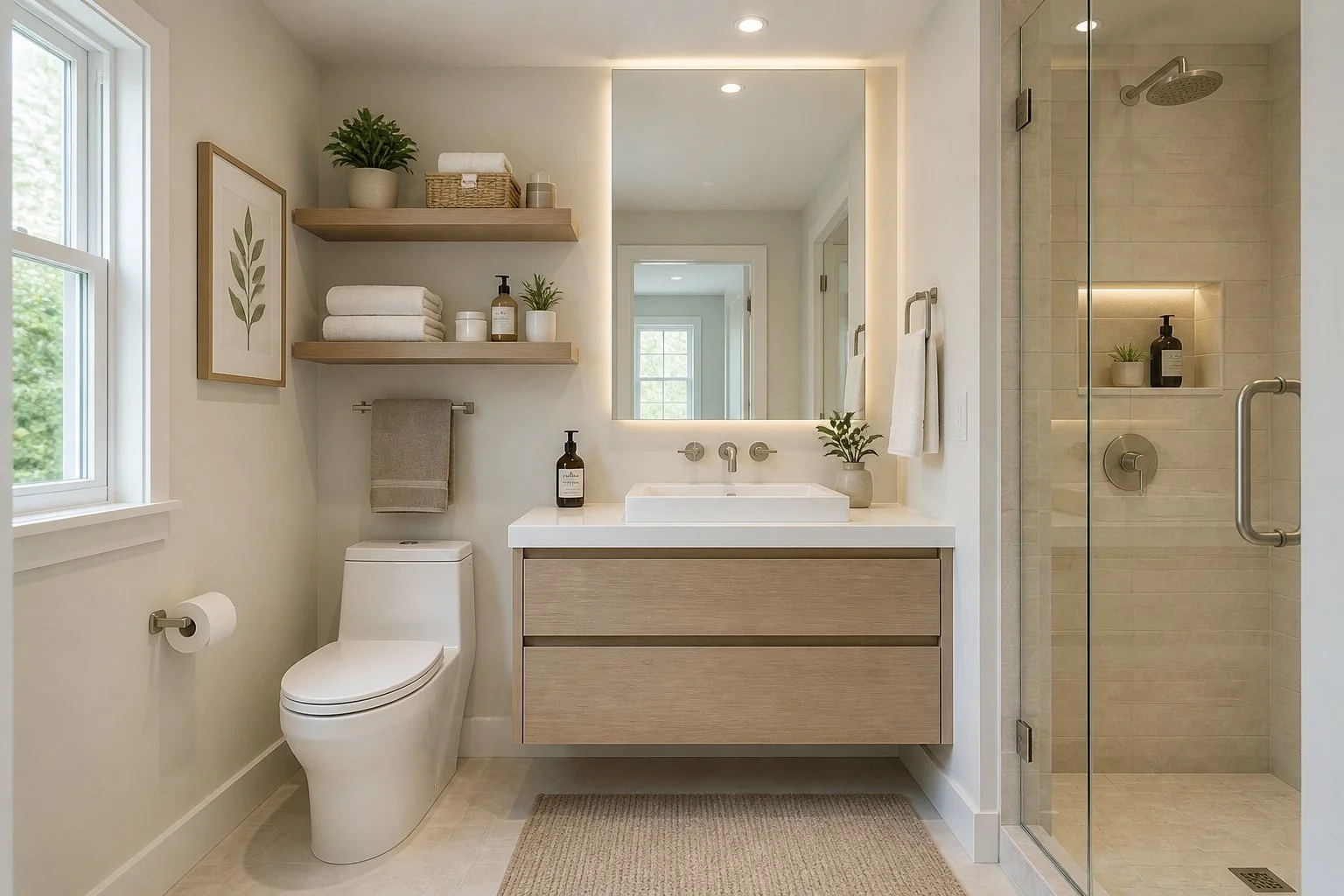
The fixtures and storage solutions you choose directly shape how open or closed a small bathroom feels. Keeping the floor visible and reducing surface clutter are the two things that make the biggest visual difference.
Floating Vanities and Wall Mounted Options
A floating vanity is one of the most effective upgrades in a small bathroom remodel. Because the cabinet is mounted to the wall rather than sitting on the floor, you can see the floor beneath it, which visually expands the room.
Wall-mounted vanities come in a wide range of sizes and styles, making it easy to find one that fits your layout and budget. In a tight space, even a narrow 24-inch floating vanity with a simple rectangular basin reads as clean and modern.
Built In Storage That Reduces Clutter
Surface clutter is the enemy of a small bathroom. Built-in niches and recessed storage let you keep everyday items organized without adding bulky shelving to the walls.
A built-in shower niche is one of the most practical additions you can make during a tile remodel. It keeps shampoo and soap organized inside the shower footprint with no hooks, caddies, or shelves required. For the rest of the bathroom, recessed medicine cabinets provide storage behind the mirror and keep the vanity surface clear.
Mirrors, Medicine Cabinets, and Recessed Solutions
A large bathroom mirror does double duty in a small space. It reflects light and creates the illusion of depth. Sizing the mirror to match the full width of the vanity is a simple move that gives the room a more intentional, finished look.
If you want storage and reflection in one fixture, a recessed medicine cabinet installs flush with the wall. It looks built in, holds plenty of items, and does not project into the room the way a surface-mounted cabinet does.
Use Finishes and Lighting to Make a Small Bath Feel Bigger
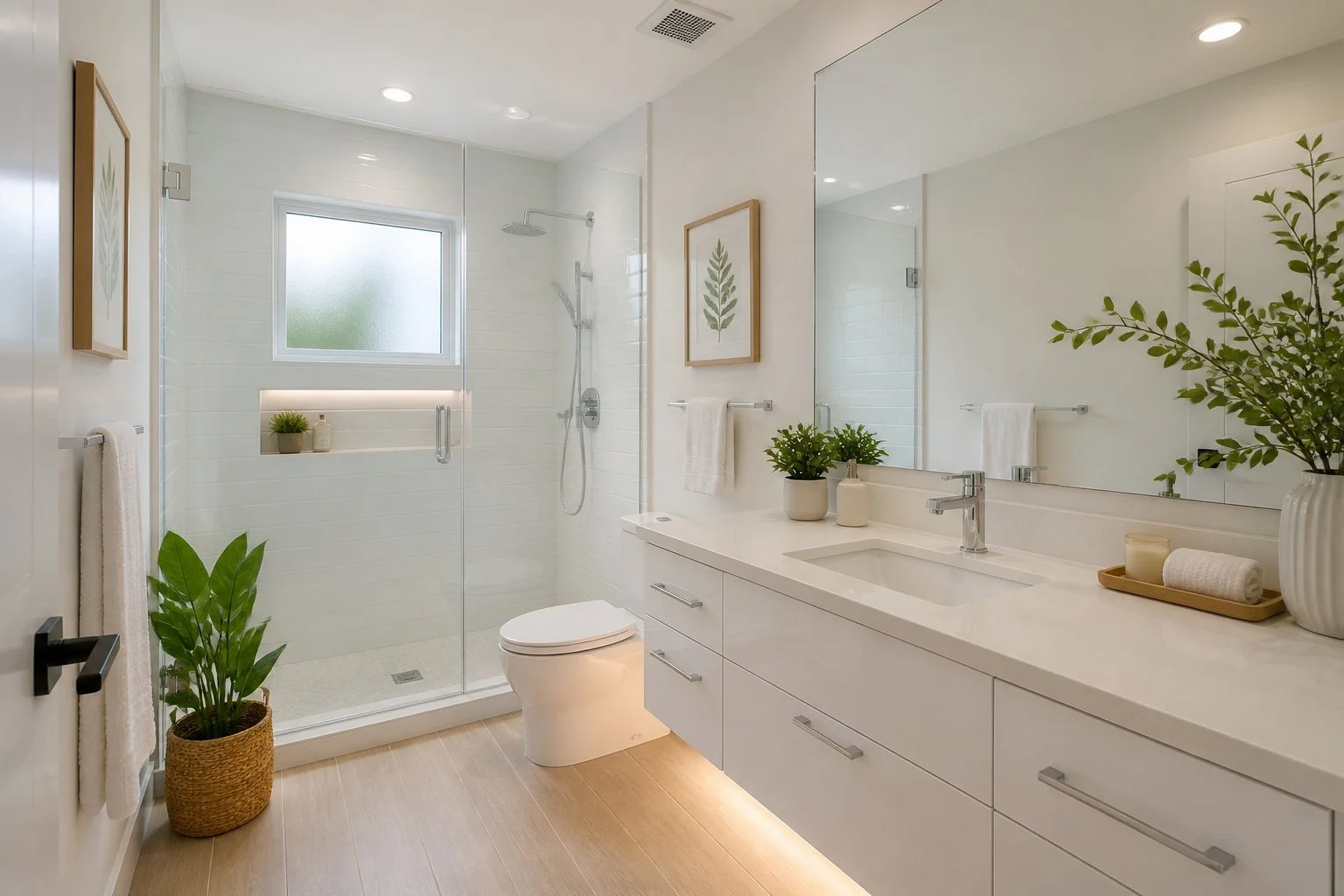
Once your layout and fixtures are set, finishes and lighting are what turn a functional bathroom into a space that genuinely feels good to be in. The right choices add depth, brightness, and personality without taking up physical space.
Frameless Glass, Reflective Surfaces, and Better Sightlines
A frameless glass shower enclosure is one of the clearest upgrades you can make in a small bathroom. Without a heavy frame or opaque door, your eye travels straight through to the back wall of the shower, which makes the whole room feel more open.
Reflective surfaces work the same way. Glossy tile, polished chrome fixtures, and large mirrors all bounce light around the room. In a bathroom without a window, this becomes especially important.
Tile, Color, and Texture Choices for Compact Bathrooms
Light, neutral colors on walls and floors make a small bathroom feel airier. Soft whites, warm creams, and pale grays are consistently strong choices. If you want to add visual interest, fish scale tile on a single accent wall or a patterned floor tile gives the room personality without making it feel heavy.
Large format tiles on the floor are worth considering because fewer grout lines mean a cleaner, less busy surface. Continuing the same tile from the floor into the shower further reinforces the open, connected feel.
Lighting and Decor Details That Add Style Without Bulk
Recessed lighting is the most space-conscious option for a small bathroom ceiling. A few well-placed recessed lights eliminate the need for a bulky ceiling fixture while distributing light evenly.
Layer your lighting when possible. A lighted mirror or sconces on either side of the medicine cabinet reduce shadows on your face and add a polished, spa-adjacent quality to the room. For decor, keep it minimal. A single potted plant, a small tray on the vanity, and cohesive hardware finish the room without crowding it.
Budget, Materials, and Project Expectations in Houston
Planning a small bathroom remodel in Houston requires a realistic picture of costs, materials, and timelines. Getting these details right early saves a lot of frustration later in the process.
Typical Small Bathroom Remodel Cost in Houston
For a small bathroom in Houston, a basic refresh that includes new fixtures, tile, and paint typically starts around $8,000. A mid-range remodel with a new vanity, tile work, updated plumbing fixtures, and some layout changes generally falls between $12,000 and $25,000.
Projects that include a full shower conversion, frameless glass, custom tile, and higher-end finishes can reach $30,000 or more. Material prices in 2026 have continued to rise, so getting a detailed, itemized quote from your contractor before committing is essential.
Why Moisture Resistant Materials Matter in Local Homes
Houston's combination of heat and humidity is genuinely hard on bathroom surfaces. Standard drywall behind tile or around the shower can absorb moisture over time, leading to mold, soft walls, and costly repairs down the road.
Moisture-resistant backer board, properly sealed tile, and mold-resistant paint are not upgrades in Houston; they are baseline requirements. Using quality ventilation, like a properly sized exhaust fan, protects your materials and keeps the air quality in the room healthy.
What to Expect From Timeline and Planning
A small bathroom remodel in Houston that stays under $25,000 typically takes two to four weeks from start to finish. Projects that involve plumbing reconfiguration, custom tile work, or structural changes take longer and require more detailed planning upfront.
The planning phase matters as much as the construction phase. A contractor who provides a written scope of work, realistic timeline, and transparent pricing before any work begins will save you a lot of stress. Teams like Home Renovations and Remodeling walk homeowners through the full scope before the first tile is cut.
Frequently Asked Questions
What are the best space-saving layout ideas for a very small bathroom?
The most effective moves in a tight bathroom are replacing a hinged door with a pocket door, swapping a tub for a corner shower, and choosing a floating vanity over a floor-mounted cabinet. These changes free up floor space and improve the way the room flows without requiring major plumbing work.
How can I remodel a small bathroom on a tight budget without sacrificing quality?
Focus your spending on tile and fixtures, since these are what you see and touch every day. Keep the plumbing in its current location to avoid the cost of rerouting pipes, and choose mid-range materials that balance durability with price.
What is the average cost range for remodeling a small bathroom in Houston?
Most small bathroom remodels in Houston fall between $8,000 and $25,000 depending on scope and materials. Higher-end projects with custom tile, frameless glass, and premium fixtures can run $30,000 or more.
What are the best walk-in shower options for a small bathroom remodel?
A frameless glass walk-in shower is the top choice for small spaces because it keeps sightlines open and makes the room feel larger. A corner shower configuration works especially well when floor space is limited, and a built-in niche keeps the interior clean and clutter-free.
Which materials and finishes hold up best in Houston's heat and humidity?
Porcelain tile, quartz countertops, and moisture-resistant backer board are all well-suited to Houston's climate. For paint, look for mold-resistant formulas, and make sure any wood elements, including cabinetry, use moisture-resistant construction to prevent warping over time.
What permits or inspections are typically required for a bathroom remodel in Houston?
In Houston, permits are generally required when a remodel involves plumbing changes, electrical work, or structural modifications. A cosmetic refresh that only updates finishes and fixtures typically does not require a permit, but it is always worth confirming with your contractor before work begins, since requirements can vary by scope and location.