
Best Tile For Houston Bathroom Remodels
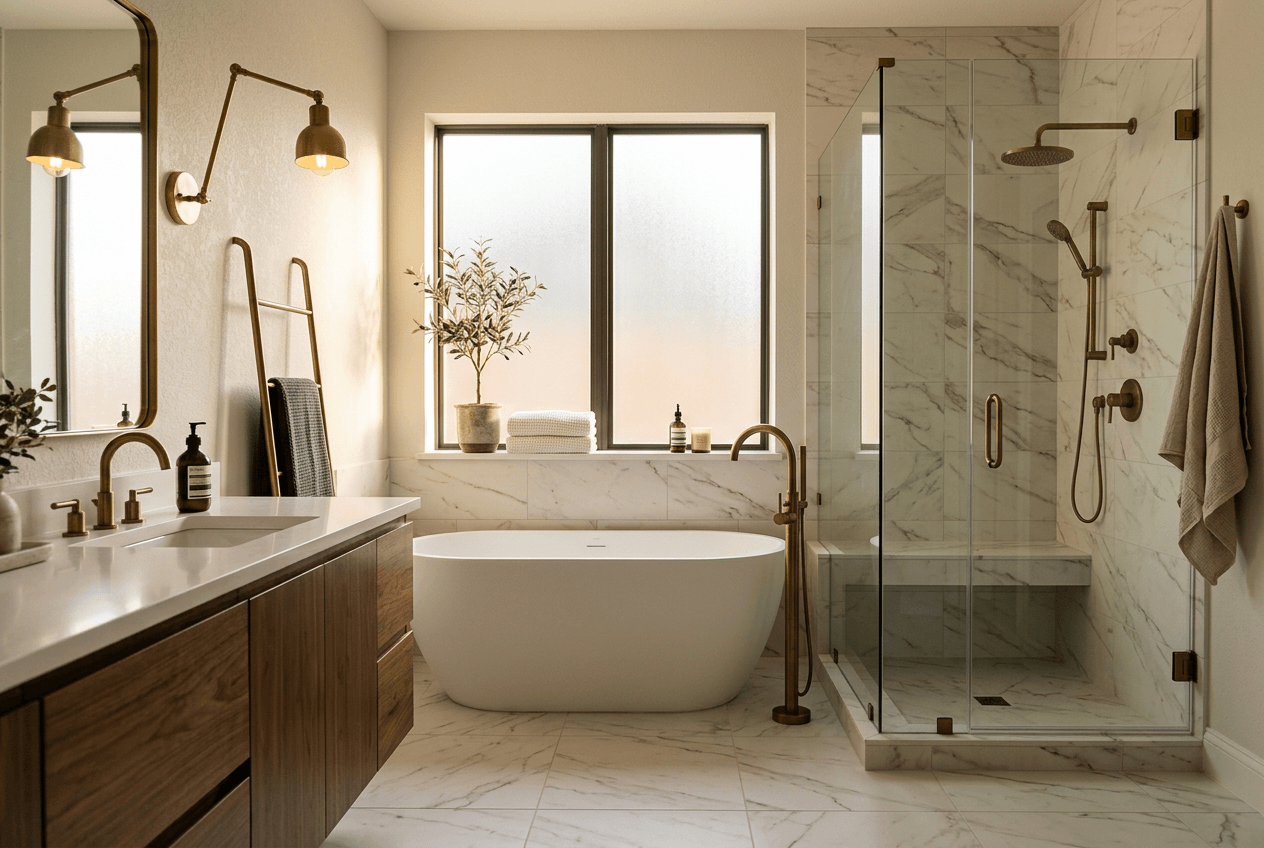
If you are planning a bathroom remodel in the Houston area, tile is going to be one of the largest visible decisions you make. It covers the floor, most of the shower, often a full wet wall behind the tub, and sometimes an accent wall behind the vanity. Get the tile right and the bathroom reads considered and expensive. Get it wrong and no lighting, hardware, or vanity choice later can rescue it.
The right tile for a Houston bathroom remodel depends on a mix of use case, style, and how well the material handles the real conditions of a Gulf coast bathroom. Humidity, everyday water exposure, and heavy use in family bathrooms all put demands on tile that some materials handle easily and others fail at over time. The material choice interacts with layout, grout, and waterproofing decisions, so getting the picks right is less about following a trend and more about matching the whole system to the way you actually use the room.
This guide covers which tile materials perform in Houston bathrooms, where to use each one, how size and layout choices age over time, and what to plan for before installation begins.
Key Takeaways
Porcelain tile is the strongest all around choice for Houston bathroom floors and wet walls, offering water resistance, durability, and a wide range of looks.
Natural stone delivers unmatched character but requires sealing and careful specification to hold up in a humid Houston bathroom.
Waterproofing, substrate prep, and grout selection matter as much as the tile itself, and skipping any of them shortens the life of even a premium installation.
Types Of Bathroom Tile That Work In Houston
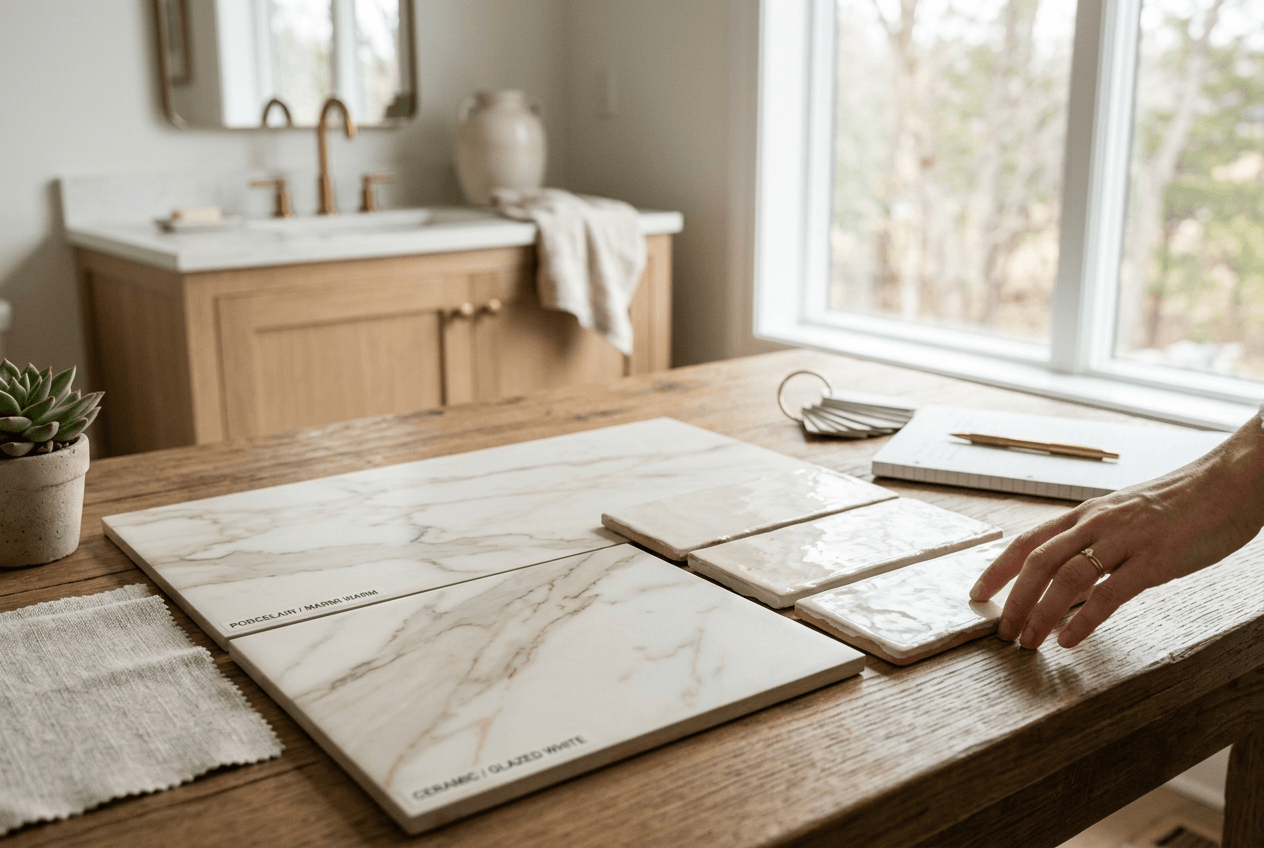
Not every tile that looks good in a showroom performs well in a Houston bathroom. The three material categories that dominate quality bathroom installations are porcelain, ceramic, and natural stone, and each has a specific set of strengths and limitations.
Porcelain Tile
Porcelain is the workhorse material for Houston bathroom remodels and for good reason. It is denser and less porous than ceramic, which means it absorbs almost no water and handles humidity, splashes, and daily wear without deterioration. Modern porcelain lines convincingly mimic natural marble, wood, stone, and concrete, giving you high end visual options without the maintenance overhead of the real thing.
Installed porcelain typically runs $8 to $15 per square foot depending on tile selection and complexity. Premium designer lines with book matched slabs or unusual finishes can push $20 to $30 per square foot. For most Houston bathroom projects, porcelain is the default recommendation that only gets set aside for a specific reason.
Ceramic Tile
Ceramic tile is softer, more porous, and easier to cut than porcelain. It works well on walls and in low traffic areas but is not the right pick for a heavy use family bathroom floor. In a powder room or a guest bathroom that sees light use, quality ceramic delivers a great look at a lower cost than porcelain, typically $4 to $10 per square foot installed.
Modern glazed ceramic tiles come in beautiful handcrafted looks, especially in subway, zellige, and small format formats that pair well with shaker vanities and traditional fixtures. Choose ceramic when the look calls for it and the room does not demand heavy performance.
Natural Stone
Marble, travertine, limestone, and slate deliver visual character no engineered material can match. Each stone has its own personality and every slab or tile is unique. That said, natural stone in a Houston bathroom needs realistic expectations. Most natural stone is porous and requires sealing before installation and periodic resealing every one to three years.
Marble in particular etches from acidic substances (toothpaste, hair products, some cleaners), and the humidity in a Houston bathroom means the surface deals with moisture constantly. Natural stone works beautifully in a primary bathroom for homeowners who love the material and are willing to maintain it. It is a poor choice for a heavy use family bathroom or for anyone who wants a low maintenance surface. Installed cost typically runs $15 to $30 per square foot, and premium stones can reach $50 or more per square foot.
Where To Use Which Tile In A Houston Bathroom
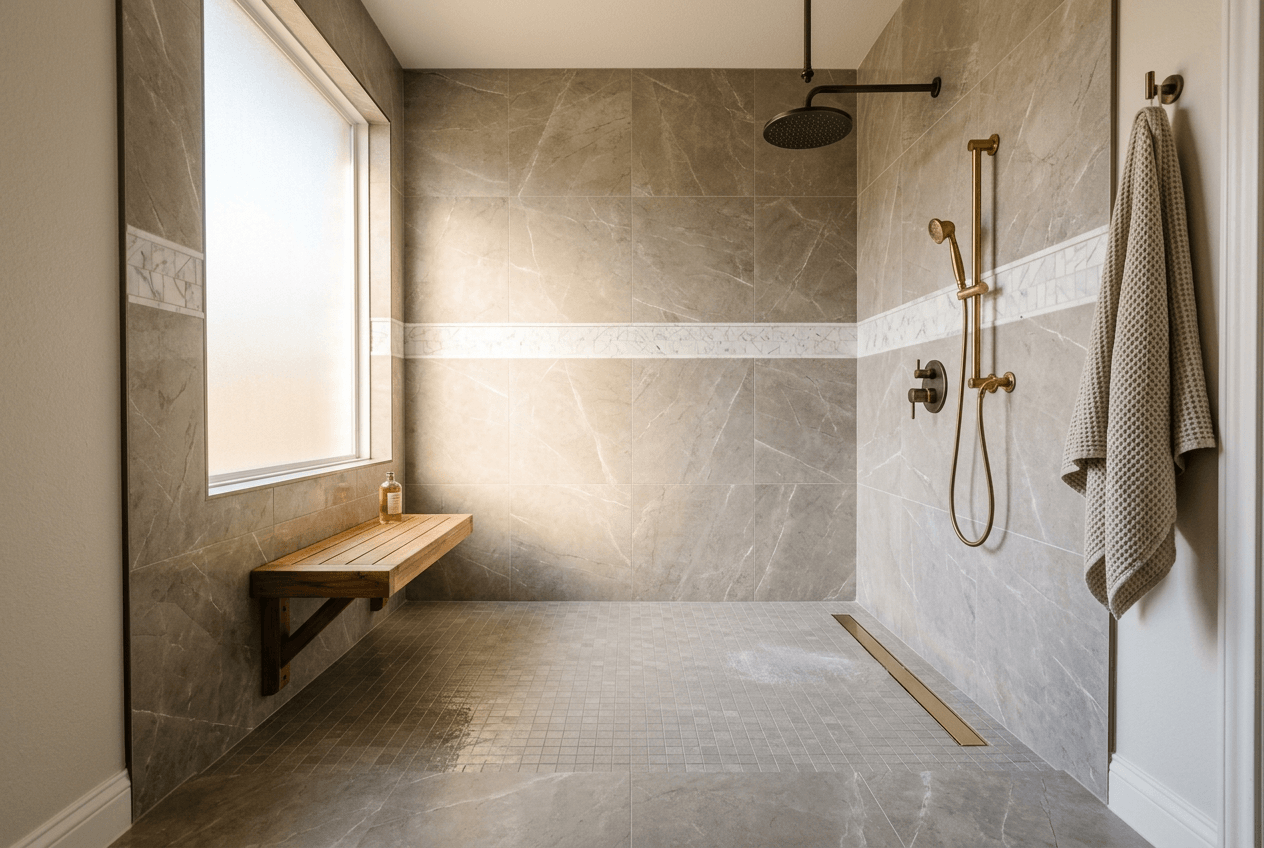
The best tile for one part of a bathroom is often not the best tile for another. Matching the material to the specific location within the room is what separates a well specified bathroom from one where the wrong choice shows up in year three.
Bathroom Floor Tile
Bathroom floors need a tile rated for wet area use with a slip resistant surface texture. Porcelain in a matte or textured finish handles this best. Look for tile with a coefficient of friction (COF) rating of 0.42 or higher for wet areas, which is the standard slip resistance threshold for residential bathroom floors.
Large format porcelain (12 by 24 inches or larger) is currently the most popular floor choice in Houston bathroom remodels because it creates a modern seamless look with fewer grout lines to clean. For small bathrooms, a smaller format tile can actually make the space feel larger visually when combined with a lighter color choice. See our take on small bathroom remodeling ideas for Houston homes for tile approaches that work in tight spaces.
Shower Walls And Wet Zones
Shower walls take direct water exposure daily and need tile that handles moisture at both the surface and the substrate. Porcelain is the strongest performer here, followed by glazed ceramic. Natural stone works in the shower but requires premium sealing and ongoing maintenance to prevent staining and etching.
A single large format tile running floor to ceiling in the shower creates a spa like modern look and dramatically reduces grout lines in the wettest part of the room. This is especially valuable for reducing long term cleaning and preventing grout related mold issues in Houston humidity. For a classic look, subway tile in a running bond pattern remains a timeless choice that ages beautifully.
Accent Walls And Backsplashes
Accent tile behind a freestanding tub, in a niche, or as a vanity backsplash gives you the chance to use a material that would be too expensive or too maintenance heavy on the full floor and walls. Handcrafted zellige, natural marble mosaic, book matched marble slab, or artisan ceramic all shine in accent applications.
Because accent tile covers a smaller area, the per square foot cost matters less and you can invest in a truly beautiful material. This is the right place in a Houston bathroom to bring in real natural stone even if you specified porcelain everywhere else.
Size, Layout, And Grout Choices That Age Well
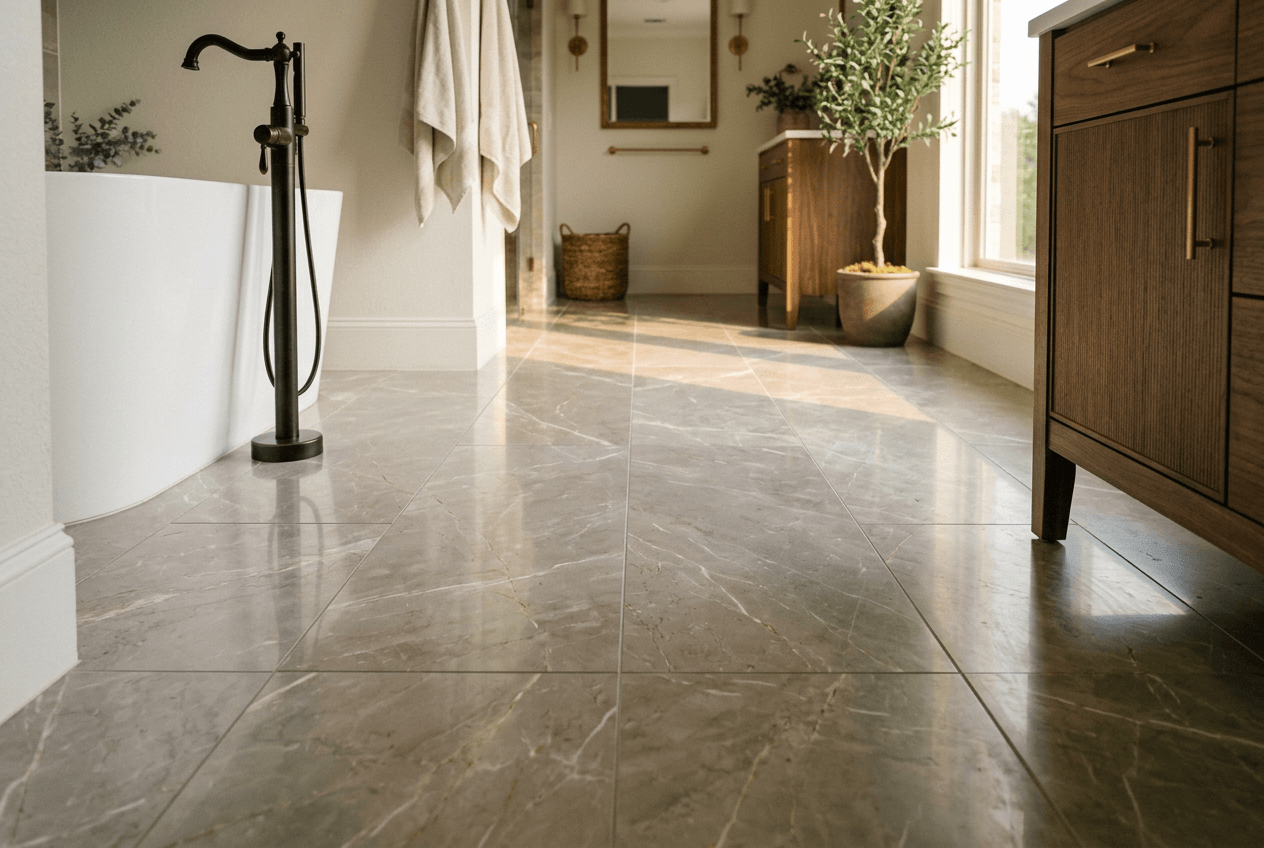
Beyond material, the size of the tile, the layout pattern, and the grout selection all shape how the finished bathroom looks and performs. These are the choices that make a bathroom feel current versus dated ten years from now.
Large Format Vs Small Format
Large format tiles (12 by 24 inches, 24 by 24 inches, or larger) create a modern seamless look with fewer grout lines, making the space feel larger and easier to clean. This is the dominant direction in current Houston bathroom design, especially for primary bathrooms.
Small format tiles (2 by 2 inches, 4 by 4 inches, penny rounds, hex mosaics) work beautifully in shower floors where the multiple grout lines help with slip resistance and in accent applications where texture and pattern matter. Mosaic tiles are also easier to install on curved or shaped shower floor drains.
Layout Patterns That Work In Houston Homes
Straight stack, running bond, herringbone, and stacked vertical are the four layout patterns you see most often in quality Houston bathroom remodels. Straight stack reads modern and clean. Running bond (offset by half or one third) reads timeless and traditional. Herringbone adds visual movement and works especially well on floors and accent walls. Stacked vertical is a strong choice for shower walls to add height perception.
Pick one dominant layout for the bathroom and use a complementary layout for the accent. Mixing more than two patterns in one bathroom starts to look busy and dates the space quickly.
Grout Selection And Color
Grout is a small line item that has an outsized effect on how the bathroom ages. Epoxy grout costs more and is harder to install but is essentially waterproof and stain resistant, making it the best choice for shower floors and heavy wet zones. Cement based grout with a quality sealer is fine for most other applications.
Grout color choice can either highlight or hide the pattern. A grout color that matches the tile creates a seamless look; a contrasting grout emphasizes the pattern. For most Houston bathrooms, matching or slightly darker grout ages more gracefully than bright white grout, which shows every discoloration over time.
Planning Your Bathroom Tile Project
Tile installation touches waterproofing, plumbing, drainage, and finish work in a way that few other trades do. Getting the planning right before demolition begins is what keeps the timeline realistic and the finished bathroom performing correctly for the next twenty years.
Waterproofing And Substrate Prep
Modern bathroom waterproofing goes far beyond the old approach of tar paper and wire mesh. Sheet applied membranes like Schluter Kerdi or liquid applied membranes like RedGard create a continuous waterproof layer behind and below the tile. This is not optional in a Houston bathroom; it is the difference between a shower that lasts and one that leaks within a decade.
Subfloor prep matters too. Cement backer board or an uncoupling membrane like Schluter Ditra prevents floor movement from cracking floor tile over time. For more on tile installation methods, see our guide on how to lay tile floors in Houston kitchens. The same substrate principles carry through to bathroom floor tile.
Cost Ranges And Timelines In Houston
Full bathroom tile work in the Houston area typically runs $3,000 to $8,000 for a standard hall bathroom with a tub surround and floor tile, and $6,000 to $15,000 for a primary bathroom with a curbless shower, full wet walls, and floor tile. Premium selections with book matched slabs or complex mosaic layouts can push $20,000 or more.
Tile installation timelines run 5 to 10 days for the tile work itself, embedded in a broader full bathroom renovation that typically runs 3 to 5 weeks total. For a broader look at project pricing in the area, see our breakdown of house renovation cost in Houston.
Work With A Contractor Who Coordinates The Trades
Bathroom tile is downstream of plumbing rough in, waterproofing, and substrate prep, and upstream of grout, sealing, and finish plumbing. Coordinating those trades in the right sequence is what keeps the timeline on track and the finished tile work looking clean and even at every edge, corner, and transition.
Home Renovations and Remodeling, based in Spring, Texas, manages full bathroom projects from initial tile selection through final walkthrough. If you are ready to talk through the right tile choices for your bathroom, you can call (281) 740-7118 to schedule a free in home consultation.
Frequently Asked Questions
What is the best tile for a Houston bathroom?
Porcelain tile is the best all around choice for Houston bathrooms. It handles humidity, water, and daily wear without deterioration, comes in a wide range of looks including convincing wood, stone, and marble visuals, and requires no sealing or ongoing maintenance beyond regular cleaning.
Can I use marble tile in a Houston bathroom?
Yes, but with realistic expectations. Marble requires premium sealing at installation and resealing every one to three years to hold up in Houston humidity. It also etches from acidic substances like toothpaste and some cleaners. Marble works beautifully for homeowners who love the material and will maintain it, but is not a low maintenance choice.
What size tile is best for a small Houston bathroom?
Both large format and small format tiles can work in a small bathroom depending on the goal. Large format tiles reduce grout lines and can make the space feel more open. Small format tiles in a light color also work well because they can extend visually and add texture. What matters most is choosing one dominant format and sticking with it consistently.
How much does bathroom tile cost in Houston?
Full bathroom tile work in Houston typically runs $3,000 to $15,000 depending on bathroom size, material selection, and layout complexity. Standard hall bathrooms with tub surrounds fall on the lower end. Primary bathrooms with curbless showers, full wet walls, and premium material selections fall on the higher end and can exceed $20,000 for premium projects.
What kind of grout should I use in a Houston bathroom?
Epoxy grout is the best choice for shower floors and heavy wet zones because it is essentially waterproof and stain resistant. Cement based grout with a quality sealer applied at installation is fine for most other bathroom applications. Grout color should either match the tile for a seamless look or contrast slightly to emphasize the pattern, avoiding bright white grout which shows discoloration over time.
Do I need waterproofing behind bathroom tile?
Yes, in every case for shower walls and wet zones. Modern sheet applied or liquid applied waterproof membranes create a continuous water barrier behind the tile and are the standard for quality bathroom installations. This is not an area to cut corners; skipped waterproofing is the single most common cause of premature bathroom failures in Houston homes.