
Best Countertops For Houston Kitchens: Quartz Vs Granite
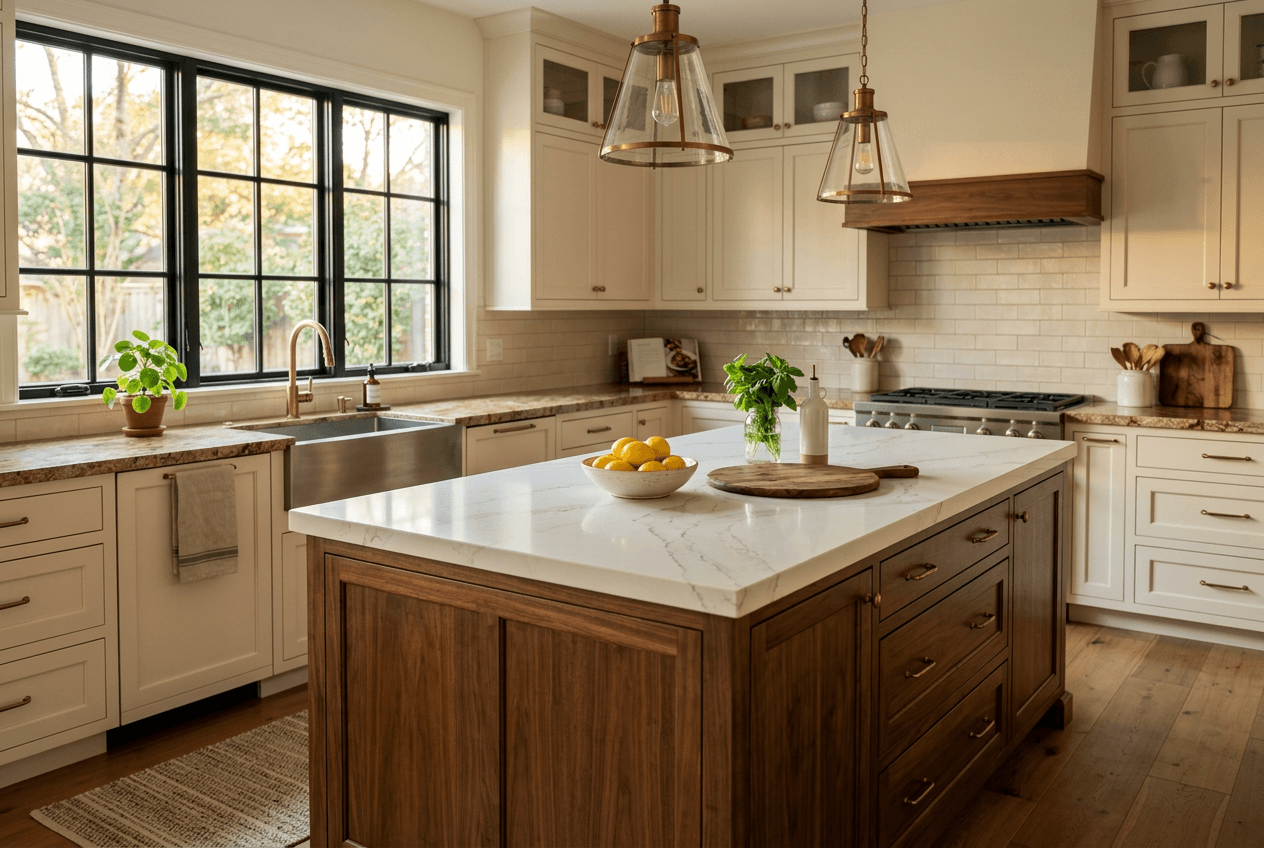
If you are planning a kitchen remodel in the Houston area, the countertop decision is usually the one that stalls the project. Quartz and granite are the two most requested materials in almost every kitchen we design, and both look great in a showroom. The differences show up over the next ten years, and those differences matter more in Houston than in a cooler, drier climate.
The right kitchen countertop for your home depends less on which material is objectively better and more on how you actually cook, entertain, and maintain the space. Quartz and granite each have real strengths and real limitations. Both handle a Houston kitchen well when specified correctly, and both create problems when the wrong slab lands in the wrong home. Getting the decision right takes an honest look at how you use your kitchen and what you want the counters to still look like in a decade.
Whether you are planning a full kitchen remodel or a countertop only replacement, this guide breaks down what quartz and granite actually are, how each performs in Houston homes, and how to make the choice with confidence.
Key Takeaways
Quartz is engineered for consistency, low maintenance, and stain resistance, which suits most Houston homeowners who want a durable everyday counter.
Granite is a natural stone with unique visual character and superior heat tolerance, but it needs periodic sealing to hold up in the Houston humidity.
The right choice depends on cooking habits, sun exposure in the kitchen, budget, and how much maintenance you are willing to do year over year.
Understanding Quartz Countertops
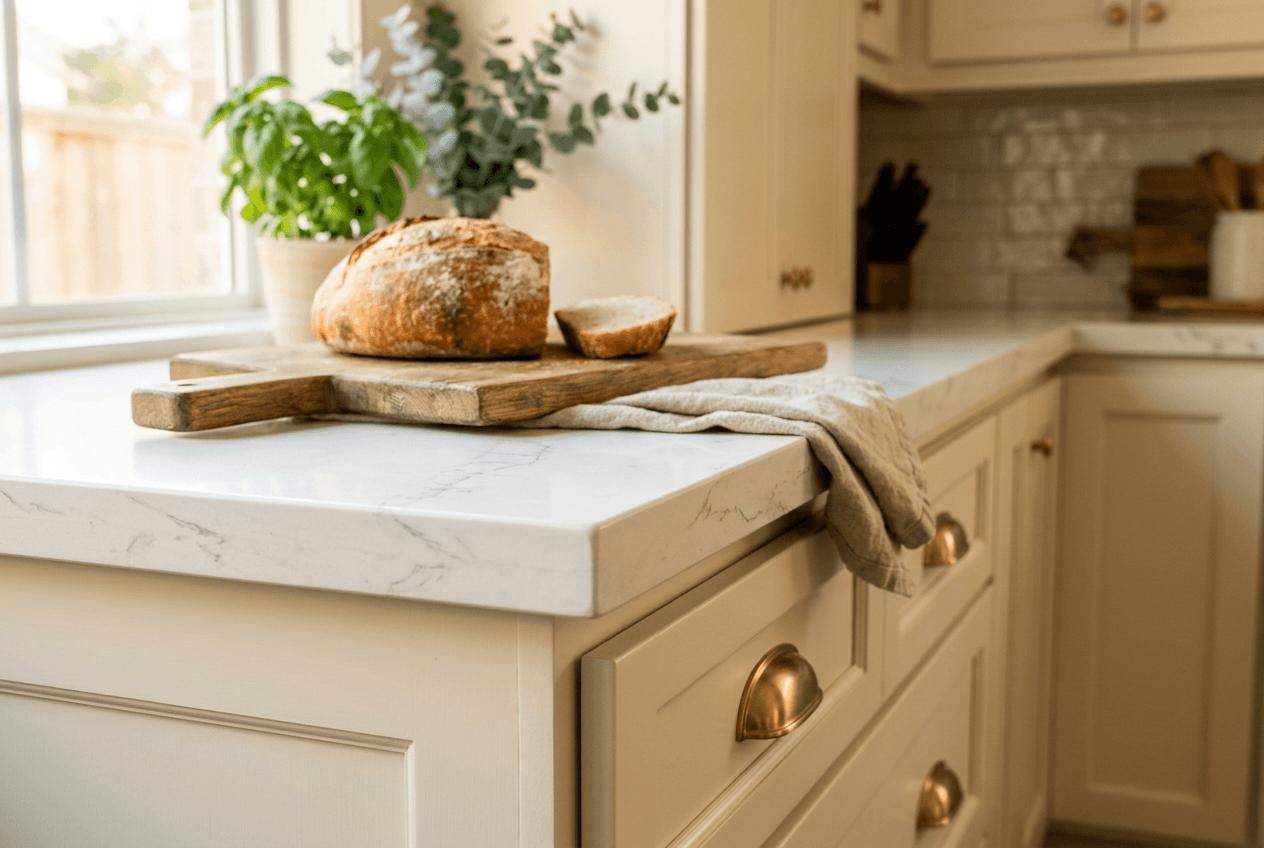
Quartz is not a slab pulled out of the ground. It is an engineered stone made from roughly 90 to 95 percent crushed natural quartz mineral bound together with polymer resins and pigments. That manufacturing process is what gives quartz its consistency and its widest set of everyday advantages.
What Quartz Is And How It Performs
Because quartz is engineered, the pattern you see in the sample is the pattern you get in the slab. There is no surprise vein, no unexpected dark spot, no natural crack. The surface is non porous, which means it does not absorb water, oil, wine, or pigment from produce. That non porous quality is exactly what makes quartz the low maintenance winner for a Houston kitchen where humidity and everyday use both work against most other surfaces.
Quartz also comes in a much wider range of looks than granite, including convincing marble and concrete lookalikes, solid whites, and highly veined statement slabs. If you love the look of Carrara marble but not the maintenance, a good quartz is the answer.
Where Quartz Struggles
Quartz has two real weaknesses. The first is heat. Direct heat from a hot pan can discolor or damage the resin binders, so quartz is not a place to set a cast iron skillet straight off the burner. Trivets are non negotiable if you cook heavily. The second is UV exposure. In kitchens with heavy direct sun, quartz can yellow slightly over years of exposure. Most Houston kitchens with normal window coverage are unaffected, but a fully sun blasted counter run near an unshaded south facing window is a real risk. For the same reason, quartz should not be used for outdoor countertops as covered in our outdoor living space guide.
Quartz Cost And Maintenance
Installed quartz in the Houston area typically runs $60 to $120 per square foot depending on brand, thickness, and edge profile. Premium designer lines can push $150 or more per square foot. Maintenance is genuinely simple. Wipe down with mild soap and water, use a soft cloth, and skip any abrasive cleaners or scrubbing pads. No sealing is ever required, which for many Houston homeowners is the single strongest argument for choosing quartz.
Understanding Granite Countertops
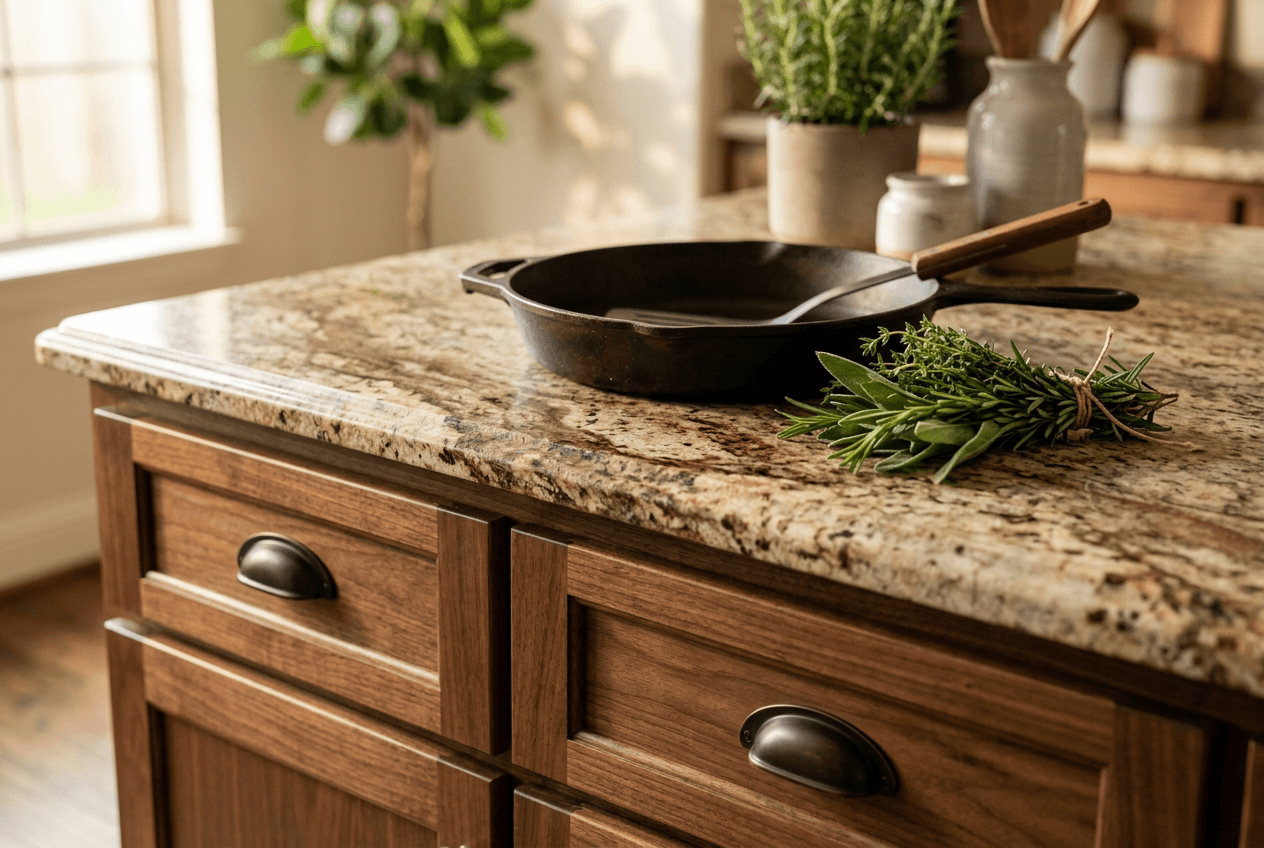
Granite is a natural igneous stone quarried in slabs and cut to fit your kitchen. Every slab is unique. The colors, veining, mineral inclusions, and movement across the surface are shaped by geology, not by a factory pattern. That uniqueness is granite's biggest strength and also the reason it takes more care to specify.
What Granite Is And How It Performs
Granite is one of the hardest natural stones commonly used for countertops. It handles heat exceptionally well, which is why it remained the top choice in serious cooks' kitchens for decades before quartz overtook it in overall market share. You can set a hot pan directly on granite without damaging the surface, which is a real advantage for anyone who cooks heavily.
The natural variation is either the entire appeal or the deal breaker, depending on the homeowner. Two slabs cut from the same block will look different. If you love that kind of one of a kind character, granite delivers what no engineered stone can match. If you want your kitchen counters to look exactly like the sample you approved, quartz is the safer bet.
Where Granite Struggles
Granite is porous, which is where the maintenance overhead comes in. Unsealed granite absorbs water, oil, wine, and pigment. A sealer applied at installation and reapplied every one to three years is what keeps granite performing well. In the Houston humidity, sealing is not optional. Neglected granite develops darkened water spots, staining around cooking zones, and etching from acidic spills like citrus and vinegar.
The other challenge is slab selection. Because every granite slab is different, you need to visit the fabricator's yard, choose your actual slab, and confirm the areas that will end up in the most visible spots. Skipping this step and picking granite from a small sample is one of the most common regrets we hear from Houston homeowners.
Granite Cost And Maintenance
Installed granite in the Houston area typically runs $50 to $100 per square foot for standard colors, with exotic slabs pushing $150 or more. Prices vary widely by rarity and origin, more so than quartz. Maintenance requires regular sealing (every one to three years for most granites), immediate cleanup of acidic spills, and daily wipe downs with a stone safe cleaner. Skipping any of these leads to visible wear over time.
Comparing Quartz Vs Granite For Houston Kitchens
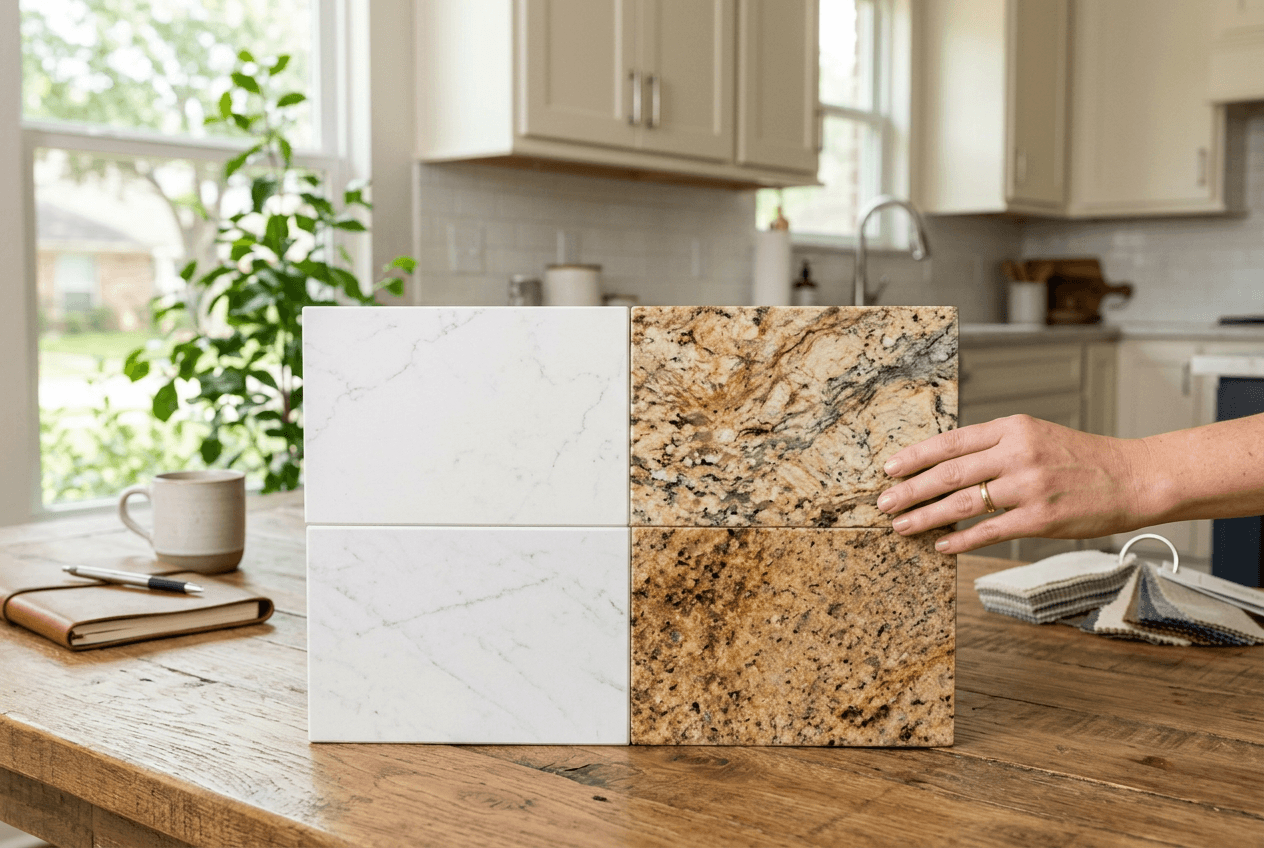
The choice between quartz and granite comes down to how you actually live in your kitchen. Both materials are excellent when specified correctly. Neither is universally better. Here is how the practical differences shake out in a real Houston home.
Durability And Everyday Wear
Quartz wins on stain and scratch resistance. Granite wins on heat resistance. Both are extremely durable overall, and both will outlast every appliance in the kitchen if maintained correctly. For a home with young kids, heavy juice and wine spills, or homeowners who dislike maintenance, quartz has the practical edge. For serious cooks who put hot pans directly on the counter and prep large quantities of food, granite's heat tolerance is a real advantage.
Appearance And Style Fit
Granite has a natural, organic look that anchors traditional and transitional Houston kitchens beautifully. It reads warmer and more textural. Quartz reads cleaner and more modern, especially in solid or subtly veined patterns. If your kitchen is heading toward a contemporary or transitional design, quartz is often the better visual match. For classic, warm, or heavily traditional kitchens, granite frequently wins on character.
Cost, Maintenance, And Longevity
Base costs are comparable across quartz and granite for standard selections. Where the numbers diverge is over time. Quartz needs no sealing and minimal specialty care. Granite requires sealing every one to three years plus stone specific cleaners. Over a ten year period, the total cost of ownership favors quartz slightly for most homeowners, though not enough to be the deciding factor. Both materials easily last 25 years or more when maintained properly, and both add resale value in Houston area homes. For a broader look at kitchen investment returns, see our take on how much equity a remodel adds in Houston homes.
Planning Your Countertop Installation
Once you have chosen quartz or granite, the installation itself decides whether the counters look and perform the way they should. This is where a good contractor and fabricator matter as much as the slab you selected.
Choosing A Slab, Fabricator, And Edge Style
For granite, visit the fabricator's yard and select your actual slab. For quartz, review a full size sample rather than a two inch chip so you can see how the pattern reads at scale. Confirm the edge profile in advance (eased, bullnose, mitered, and waterfall all have distinct looks and different costs). Ask the fabricator how seams will be placed. Well planned seams disappear. Poorly planned seams stay visible for the life of the counter.
Cost Ranges And Timelines In Houston
A full countertop replacement in the Houston area typically runs $3,500 to $8,500 for a standard kitchen with about 40 to 55 square feet of counter space, depending on material choice, edge profile, and complexity. High end selections or larger kitchens can exceed $12,000. Timeline is usually 2 to 4 weeks from template to installation, with the biggest variable being slab availability. For a broader breakdown of full kitchen pricing, see our guide on house renovation cost in Houston.
Work With A Contractor Who Coordinates The Trades
Countertop installation touches cabinetry, plumbing (sink cutouts and reconnection), and often electrical if any island outlets or cooktops are involved. Coordinating those trades in the right order is what keeps the project on schedule and prevents the finished counter from having visible issues around the sink, cooktop, or seams.
Home Renovations and Remodeling, based in Spring, Texas, manages full kitchen and countertop projects from initial selection through final installation. If you are ready to talk through your quartz or granite decision, you can call (281) 740-7118 to schedule a free in home consultation.
Frequently Asked Questions
Which is more expensive, quartz or granite?
Base costs are similar. Standard quartz typically runs $60 to $120 per square foot installed. Standard granite typically runs $50 to $100 per square foot installed. Premium selections in either material can exceed $150 per square foot. Over a ten year ownership window, quartz costs slightly less overall because it requires no sealing.
Which lasts longer, quartz or granite?
Both easily last 25 years or more when maintained properly. Quartz is more forgiving of neglect because it does not require sealing and resists staining without any special care. Granite lasts equally long but only when regular sealing and prompt cleanup of acidic spills are part of the routine.
Is quartz or granite better for a Houston kitchen?
For most Houston homeowners, quartz is the more practical daily choice because the humidity is unforgiving to porous materials and quartz never needs sealing. For serious cooks who prioritize heat resistance and natural character, granite is an excellent choice as long as regular sealing is maintained.
Can I use quartz outdoors in Houston?
No. Quartz is not recommended for outdoor use because UV exposure over time discolors the resin binders that hold the material together. For outdoor countertops in Houston, sealed granite or concrete are the correct choices.
Do I need to seal quartz or granite countertops?
Quartz never needs sealing. Granite needs sealing at installation and again every one to three years depending on the specific stone and how heavily the counter is used. A simple water bead test tells you when it is time to reseal.
What countertop is best for resale value in Houston?
Both quartz and granite are considered upgrade level materials by Houston area buyers and both add resale value compared to laminate or tile. Quartz has slightly stronger appeal to younger buyers because of its clean modern look and lower maintenance. Granite still appeals strongly in traditional and higher end homes.