
How to Avoid Remodeling Scams in Houston

Remodeling scams pop up in Houston more often than people expect, and they can drain your wallet fast if you’re not careful. Whether you’re thinking about a kitchen update, a new roof, or just a bathroom refresh, it’s smart to know what to look out for so you don’t get burned.
Most contractor fraud follows pretty familiar patterns. Once you get familiar with the warning signs, you’ll have a much better shot at dodging scams before they even start.
This article highlights the biggest red flags, what a good contract should cover, and what you can do if things go sideways.
Key Takeaways
Look out for high-pressure sales tactics, big upfront payment asks, and missing written contracts before you hire anyone.
Get a detailed contract with a clear payment schedule, a defined scope of work, and permit requirements. That’s your main protection during the project.
If you suspect fraud, keep records of everything and report it to the right consumer protection agencies in Texas.
Spot the Biggest Red Flags Before You Hire

Catching a scam early can save you a ton of headaches. The warning signs might show up right from the first conversation or when you ask for proof of licensing and a written estimate.
Door-to-Door Pitches, Storm Chasing, and High-Pressure Sales Tactics
If a contractor knocks on your door out of nowhere, especially after a storm, be careful. Storm chasers love to swoop into neighborhoods hit by bad weather and pressure homeowners into quick decisions.
When someone tells you a deal is only good today or insists you sign right away, that’s a huge red flag. If they discourage you from getting other bids or opinions, just walk away. Good contractors want you to take your time.
Large Upfront Payments, Cash Demands, and Final Payment Risks
Real pros usually ask for no more than 10 to 30 percent upfront. If someone wants more than half before they even start, that’s not normal.
If a contractor pushes for cash payments only, don’t do it. You won’t have any proof if things go wrong. Make sure your final payment only happens after all the work is done and you’ve had a chance to check everything.
No Written Contract, Vague Bids, and Missing Scope Details
Don’t ever agree to work based just on a handshake or a verbal promise. Always get a written estimate. If a bid just lists a lump sum with no details, it’s way too easy for a contractor to cut corners or charge for work they never did.
A solid contract spells out exactly what materials they’ll use, the work they’ll do, and the timeline. If a contractor won’t put anything in writing, that’s your sign to move on.
Suspiciously Low Quotes, Substandard Materials, and Phantom Work Billing
If one quote is way lower than the rest when you compare estimates, something’s up. They might plan to use cheap materials or tack on hidden charges later. Phantom work billing means charging for stuff that never got done.
Ask exactly what materials they’ll use and double-check that those materials actually show up on your job.
Unlicensed Work, Permit Evasion, and Contractor Licensing Checks
In Texas, a lot of remodeling trades need a license. You can check a contractor’s license with the Texas Department of Licensing and Regulation.
Permits don’t just protect the contractor, they protect you, too. If someone suggests skipping permits to save time or money, that’s a big problem. Always check online reviews and the Better Business Bureau before you sign anything.
Protect Yourself With Better Contracts, Payments, and Next Steps
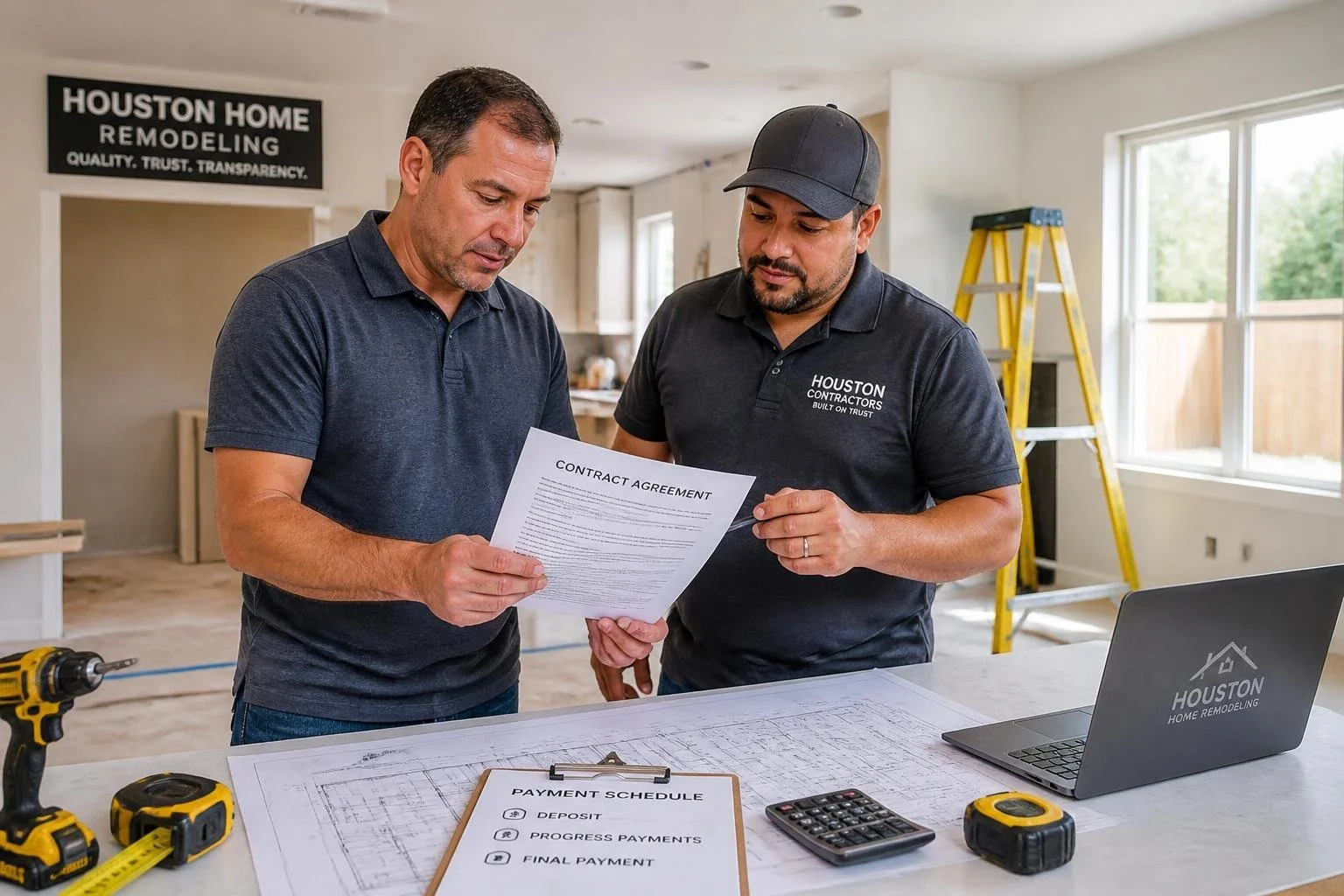
A good contract and a smart payment plan can save you from a lot of trouble. Knowing what to put in your contract and how to react if things go wrong gives you way more control.
What a Written Estimate and Detailed Contract Should Include
Your contract should always have a written estimate, a full scope of work, details on materials, the timeline, and payment terms. Don’t sign until you’ve read everything.
Check that these things are in writing:
Scope of work: what’s included and what’s not
Materials: brand, quality, and how much
Project timeline: when work starts and when it should finish
Payment schedule: how much and when you pay
Right to cancel: Texas lets you cancel some contracts within three business days
Payment Schedule, Change Orders, and Unforeseen Problems
Tie each payment to a project milestone, not just a date. This way, the contractor has to finish each part before getting more money.
Change orders need to be in writing before anyone does extra work. If they find hidden problems, like water damage, you should never just agree to extra charges verbally.
Insurance Claims, Assignment of Benefits, and Fraud Concerns
If you’re using insurance for your project, be careful with assignment of benefits forms. Signing one gives your claim rights to the contractor, and this has caused a lot of problems with fraud in Texas.
Always talk directly with your insurance company about your claim. Don’t let a contractor handle it for you unless you really trust them and review everything carefully.
How to Respond to Disputes, Lien Fraud, and Abandoned Jobs
If a contractor bails on the job or files a lien on your property without a good reason, write everything down. Send any complaints by certified mail so you have proof.
You can file a complaint with the state attorney general’s consumer protection division or use Texas dispute resolution programs. The sooner you act, the better your options.
Frequently Asked Questions

How can you tell if a remodeling contractor is scamming you before you sign anything?
Look for contractors who show up at your door uninvited, push you to sign right away, or won’t give you a written estimate or proof of licensing. A trustworthy pro answers your questions, shares references, and lets you compare bids. Always check the BBB and online reviews before you say yes.
What red flags should you look for in a contractor's estimate, contract, or change orders?
If the bid is vague and doesn’t list materials or scope of work, that’s a red flag. Watch out if the contract skips the payment schedule, timeline, or a process for change orders. Any contractor who won’t put things in writing isn’t worth the risk.
What is the safest way to pay a contractor without risking fraud or unfinished work?
Set up payments based on project milestones, not just dates, and keep your upfront payment between 10 and 30 percent. Pay by check or credit card so you have a record. Hold the last payment until all the work’s done and you’re happy with it.
Which licenses, insurance, and permits should you verify for residential remodeling work?
Check the contractor’s license with the Texas Department of Licensing and Regulation. Make sure they carry general liability insurance and workers’ comp, and ask to see proof. Permits need to be pulled before any job that requires them.
How can you confirm a contractor's business history, references, and complaints before hiring?
Search their business name on the BBB website and check reviews on Google or other sites. Ask for at least three references from recent jobs and actually call them. If you see a lot of unresolved complaints or can’t verify their history, keep looking.
What steps should you take if you suspect you've been targeted by a home improvement scam?
First, stop all payments right away. Collect everything you can—contracts, receipts, photos, and any written messages.
Go ahead and file a complaint with the Texas Attorney General's consumer protection office. You should also report the contractor to the Texas Department of Licensing and Regulation.
If you paid with a credit card, reach out to your card issuer and try disputing the charge.