
Comparing Houston vs. Suburban Renovation Costs
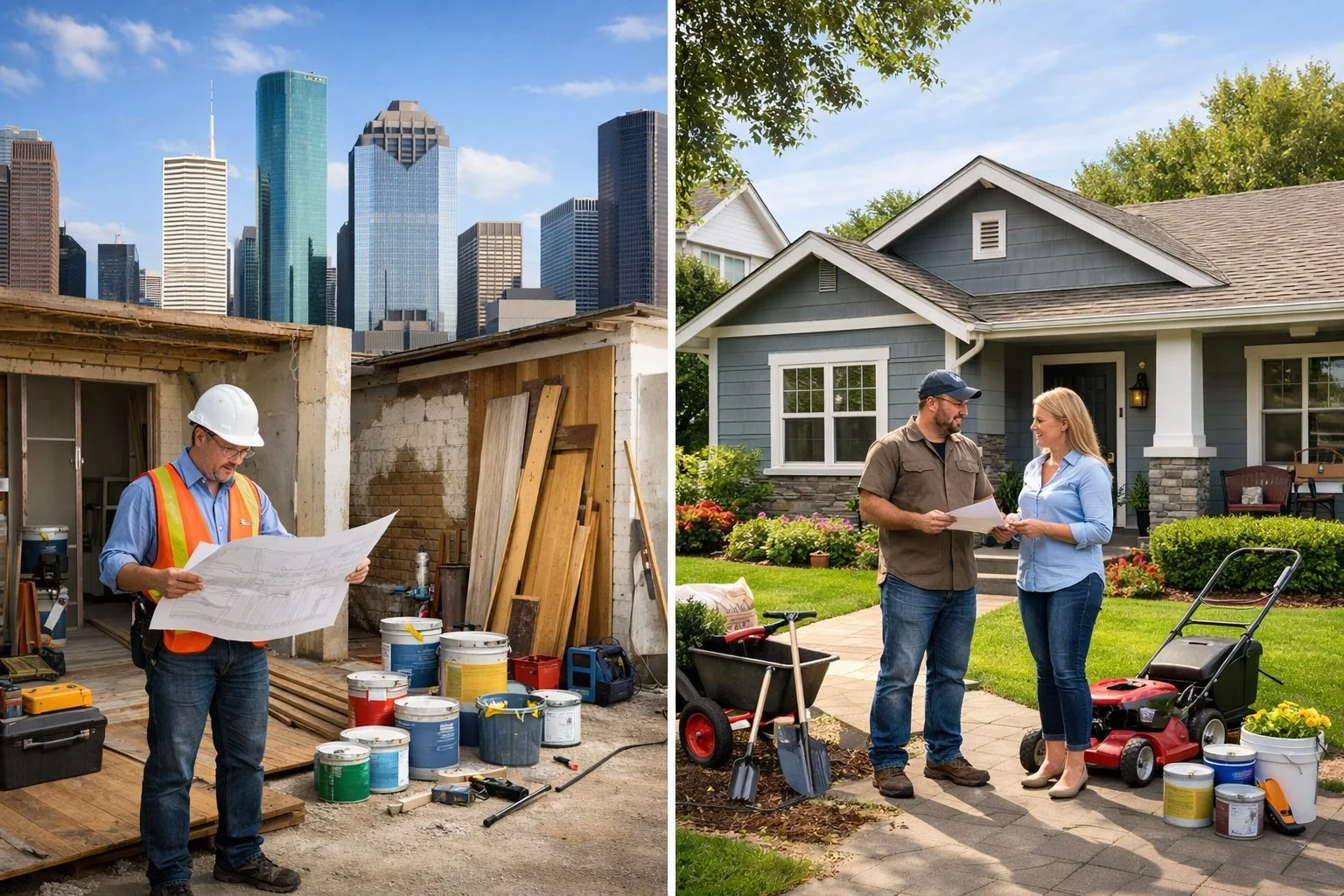
Thinking about renovating your home in the Houston area? Where you live can really change what you'll pay.
Renovation costs in Houston proper usually run 10-20% higher than in the suburbs, mostly because of permit fees, labor rates, and material delivery charges.
The gap between city and suburban pricing hits every project type. Kitchen remodels, bathroom updates, and room additions all cost more inside Houston's city limits.
Knowing these differences helps you budget better and avoid surprises.
Your zip code shapes more than just your commute. It affects contractor availability, building code hoops, and how much you'll shell out per square foot.
Let’s break down the specific costs so you know what to expect based on your address.
Key Takeaways
Houston renovations cost 10-20% more than suburban projects because of higher permit fees and labor rates
Every project type, from kitchens to additions, shows a price difference between city and suburban locations
Your exact location affects contractor costs, building codes, and material delivery charges
Key Factors Influencing Renovation Costs in Houston Versus Suburbs

Your renovation budget depends on a bunch of factors that change between Houston’s urban center and the suburbs. Labor rates, permitting, material access, and local market quirks all play a part in the final bill.
Labor and Professional Services
Labor costs eat up a huge chunk of your renovation budget. In Houston’s urban core, you’ll usually pay 15-25% more for skilled tradespeople than in the suburbs.
An electrician in downtown Houston might charge $85-$110 per hour. In suburbs like Katy or Sugar Land, you’re more likely to pay $65-$85 per hour.
Plumbers follow the same trend, with urban rates running $95-$120 per hour versus $70-$95 in the suburbs.
These higher urban rates come from bigger overhead costs, parking headaches, and more demand for services. Suburban contractors often spend less to run their business, so they can pass those savings to you.
Competition changes things too. More contractors fight for jobs in the suburbs, which can drive your remodeling costs down by 10-20%.
Permitting, Regulations, and Compliance
Houston uses its own permit processes and fees, different from what you’ll find in the suburbs. City of Houston permits cost more upfront, but they usually move faster through the system.
If your project sits in a historic district or a special zoning area (pretty common in urban Houston), you’ll need extra approvals that add $500-$2,000 to your costs.
Suburban cities like Pearland or The Woodlands have their own building codes and inspection rules. Sometimes, they enforce stricter standards for structural changes, which can tack on engineering costs of $1,500-$4,000.
Permit fees can swing a lot:
Houston city limits: $300-$800 for standard remodeling
Suburban municipalities: $200-$600 for similar work
HOA approvals (pretty common in the ‘burbs): $0-$500 extra
Material and Supply Chain Considerations
Material prices stay pretty steady across Houston and the suburbs, but delivery and logistics shake things up. Suppliers often charge $75-$150 extra to deliver to suburban spots outside their usual range.
Your remodeling costs might jump 5-10% in the suburbs because of these delivery fees. Urban projects get a break since they’re closer to more supplier warehouses and showrooms inside Loop 610.
Suburban projects sometimes require bigger material orders just to make delivery worth it. That can affect your cash flow, and you might need to buy and store materials sooner.
Getting specialty materials isn’t always the same either. High-end finishes and custom products usually arrive faster at Houston addresses, which can shave 1-2 weeks off your project timeline.
Market Demand and Neighborhood Impact
Current market trends push prices up or down depending on the area. Houston’s inner loop neighborhoods like Heights and Montrose buzz with remodeling activity, which can drive costs up 20-30% above suburban rates.
Your neighborhood’s vibe impacts what you’ll spend. Upscale suburbs like Memorial Villages or Cinco Ranch expect fancier finishes, sometimes matching or even beating city prices.
You’ll probably get more contractor bids in the suburbs, giving you better leverage to negotiate. In Houston, access and parking headaches can mean fewer bids and higher prices.
Seasonal demand matters too. Both city and suburbs see remodeling costs rise 10-15% in the busy summer months.
Houston vs. Suburban Renovation Cost Breakdown by Project Type

Renovation costs change between Houston’s urban core and the suburbs, with city projects usually running 15-25% higher thanks to labor, permits, and delivery fees.
Kitchen and bathroom remodels show the biggest price gaps, while cosmetic updates stay pretty similar across the map.
Kitchen Remodel Costs
A mid-range kitchen remodel in Houston costs between $25,000 and $45,000. In the suburbs, expect $20,000 to $38,000.
That price gap mostly comes from higher contractor rates in the city, where you’ll see $85-$110 per hour compared to $65-$90 in the suburbs.
Your final kitchen cost depends a lot on what you’re changing. Minor updates like cabinet refacing, new countertops, and new appliances run $15,000-$25,000 in the suburbs and $18,000-$30,000 in Houston.
Major renovations with wall changes, plumbing work, and custom cabinets can hit $75,000-$100,000 in the city.
Material costs stay pretty even, but delivery fees add $200-$500 more for urban jobs. Houston’s permit fees also run higher at $400-$800 compared to $250-$500 in most suburbs.
Bathroom Remodel Costs
Bathroom renovations follow the same urban-suburban split. A basic bathroom remodel in Houston usually costs $12,000-$22,000, while the suburbs range from $10,000-$18,000.
High-end bathrooms with luxury fixtures and fancy tile work can go over $35,000 in the city.
Your bathroom remodel bill comes down to fixtures, labor, and materials. Toilets, vanities, and showers cost about the same everywhere, but labor drives up city prices.
Houston plumbers charge $90-$125 per hour, while suburban plumbers stick to $70-$100.
Tile work and waterproofing eat up a big part of the budget. Pro tile installation costs $12-$18 per square foot in Houston, compared to $10-$15 in the suburbs.
If you’re adding a second bathroom as a home addition, get ready for more complexity and higher costs.
Additions, Expansions, and Major Renovations
Home addition costs swing a lot depending on location. Houston homeowners pay $180-$250 per square foot for additions, while the suburbs average $150-$210.
A 400-square-foot addition runs $60,000-$100,000 in the city, and $50,000-$84,000 in the suburbs.
Addition costs cover foundation work, framing, roofing, and utility hookups. Concrete foundation work goes for $8-$12 per square foot in Houston, or $6-$10 in the suburbs.
Roof replacement for the new space adds $6,000-$12,000, depending on what you pick and how tricky the job is.
Your home remodel bill climbs if you’re making structural changes. Moving walls means permits, engineering, and skilled labor, which all cost more in the city.
Adding insulation and boosting energy efficiency adds $2-$4 per square foot, but it can shave your utility bills later.
Big renovations that touch multiple rooms or the whole house cost $100-$200 per square foot in Houston. In the suburbs, you’ll see $80-$150 per square foot for similar work.
Cosmetic Upgrades: Painting, Flooring, and Landscaping
Interior painting costs don’t change much by location. Professional painting runs $2.50-$4.50 per square foot citywide, with whole-home jobs coming in at $4,000-$8,000.
Paint and supplies cost the same, so any price difference comes from labor.
Flooring installation ranges from $6-$12 per square foot for everything. Hardwood installs cost $8-$15 per square foot, while laminate and vinyl are $4-$8 per square foot everywhere.
Urban projects might add $200-$400 in delivery and parking fees.
Landscaping costs usually favor the suburbs because of bigger lots and easier access. Basic landscaping runs $3,000-$8,000 in the suburbs, since there’s more ground to cover.
Houston homes with smaller yards spend $2,000-$5,000, but the per-square-foot rate is higher.
Concrete work for driveways and patios costs $8-$15 per square foot in Houston, and $6-$12 in the suburbs.
Both city and suburban projects need permits for these upgrades, but suburban processing times usually move faster.
Frequently Asked Questions

Renovation costs in Houston usually range from $100 to $200 per square foot. Suburban areas often see $90 to $180 per square foot.
Material access, contractor rates, and local rules all shape the price differences.
What are the average renovation costs per square foot in Houston compared to surrounding suburbs?
Houston renovation costs usually land between $100 and $200 per square foot for most projects.
Basic updates start at about $100 per square foot, while high-end makeovers can hit $200 or more.
Suburbs like Katy, Sugar Land, and The Woodlands typically range from $90 to $180 per square foot. Labor usually costs a bit less than downtown Houston, with a difference of about 5-10%.
Your exact costs depend on the project type and materials you pick. Kitchens and bathrooms tend to cost more per square foot than other rooms.
How do renovation costs for a residential property in Houston differ from those in nearby suburban areas?
Houston homes face higher contractor rates because of more demand and bigger business costs. You’ll pay more for labor in the city, with skilled tradespeople charging $50 to $100 per hour.
Suburban contractors usually charge $45 to $85 per hour.
Material delivery costs usually stay lower in Houston, since you’re closer to suppliers. You might save on transportation fees if you’re inside the city.
Parking permits and site access fees can add $200 to $500 to Houston projects. Suburban homes usually have easier access and don’t need those extras.
What factors influence the cost of home renovations in Houston versus those in the suburbs?
Labor availability plays a big role in your budget. Houston has more contractors, so prices can get competitive, but high demand keeps rates up.
How old your property is matters too. Houston has more older homes that might need extra structural work or code updates.
Suburban homes are usually newer and need fewer surprise repairs.
Your project timeline can change costs too. Houston contractors might charge more for fast turnarounds because their schedules stay packed.
Suburban contractors often have more wiggle room.
Homeowner association rules in the suburbs can limit what you do and slow things down. Houston homes outside HOAs usually deal with fewer restrictions.
Can you expect a higher ROI from renovating a home in Houston or in a suburban location?
Houston renovations typically return 55-65% of your money when you sell. Kitchen and bathroom updates give the best returns in city neighborhoods.
You’ll see stronger appreciation in established Houston areas near job centers.
Suburban renovations return 60-70% on average. These areas attract families looking for move-in ready homes, so your ROI can be higher in suburbs with top-rated schools.
Market conditions really shift your potential returns. You’ll want to check recent sales in your neighborhood.
A $50,000 kitchen renovation might add $30,000 to $35,000 in value, depending on where you are.
What are the key differences in material and labor costs for renovations in Houston compared to its suburbs?
Labor costs in Houston usually run about 5 to 15 percent higher than what you’d see in the suburbs.
Electricians, plumbers, and carpenters tend to charge premium rates for work inside the city. If you hire a licensed electrician in Houston, you’ll probably pay somewhere between $75 and $100 per hour. In the suburbs, most folks pay closer to $65 to $85.
Material costs don’t really change much from one area to the next. Sometimes, you can save $500 to $1,500 on a full renovation just by buying your materials in Houston, mostly because there are more suppliers to pick from.
Big-box stores seem to stick to the same pricing, no matter where you shop.
Houston usually has better access to specialty materials, so you might pay less for things like tile, countertops, or fixtures. Shopping in the city gives you more choices, and you can skip those annoying delivery fees.
If you’re working on a project in the suburbs, you might have to add $300 to $800 just for delivery of specialty items.
How do permit and regulation costs impact renovation expenses in Houston versus suburban areas?
Houston usually wants you to get permits for most structural, electrical, or plumbing work. Basic permits run between $75 and $300, depending on what you're planning.
If you're doing a major renovation, you'll probably need several permits. Those can add up fast, sometimes totaling $500 to $1,500.
Suburban cities each set their own fees and rules. Most Houston suburbs charge $50 to $400 for a permit. Some towns ask for more, but they might process your paperwork a bit quicker.
Inspection rules can slow things down and bump up your costs. In Houston, inspectors check your work at certain stages. If you don't pass, you'll need to pay for them to come back.
Suburbs do inspections too, but inspector schedules and rules can be a little different.
Building codes aren't exactly the same everywhere. Your contractor has to keep up with the local rules, or you could face expensive fixes. Some suburbs expect stricter standards for energy efficiency or materials, so you might pay more at the start.