
Choosing Countertops for Your Houston Kitchen
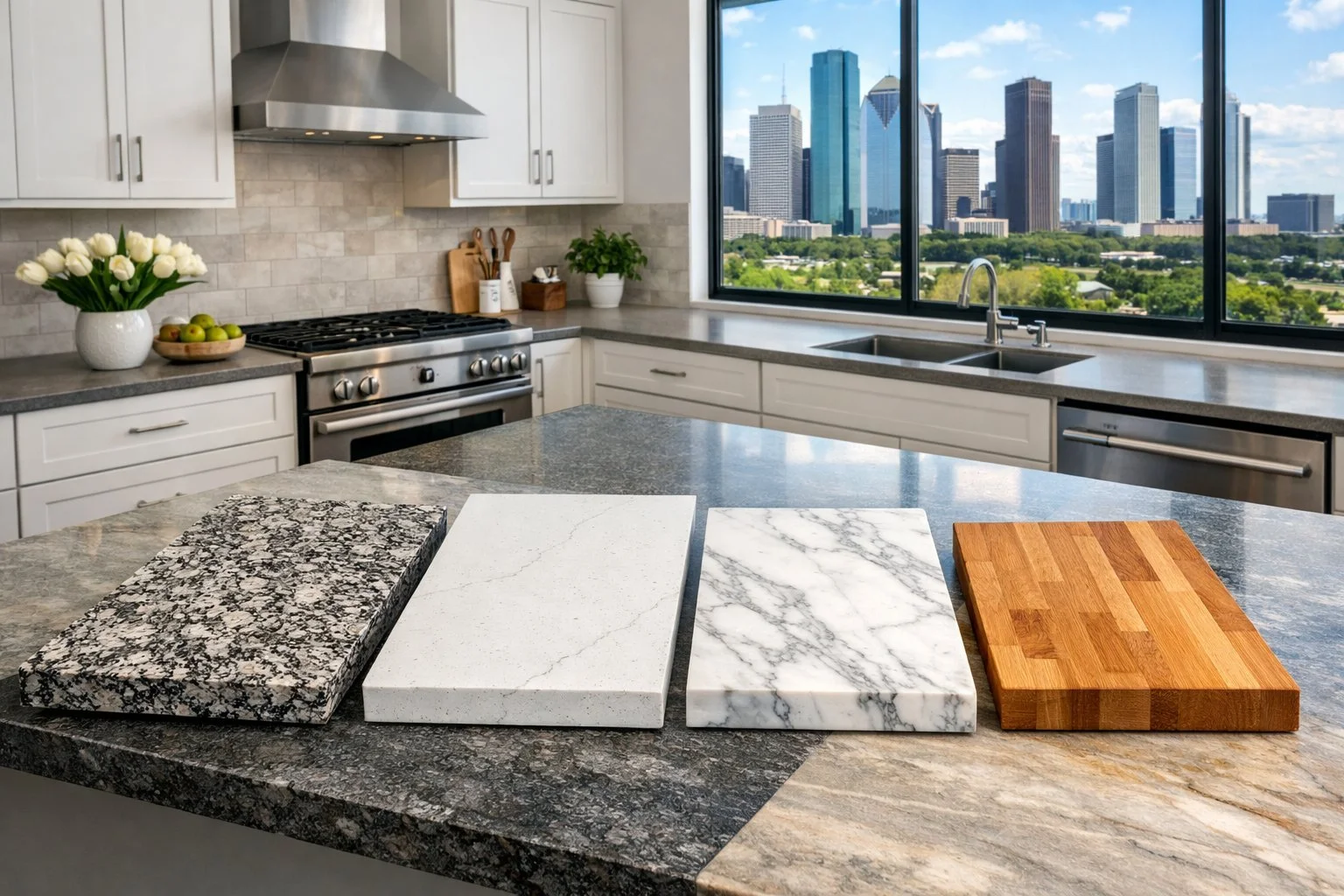
Your kitchen countertops shape how your space looks and feels every single day. The best choice really depends on how you cook, your budget, and what kind of vibe you want.
Houston's climate and your lifestyle definitely play a part in the decision. You can't ignore them.
The best countertop material for your Houston kitchen balances durability, maintenance, and looks while still making sense for your wallet. Granite, quartz, marble, and butcher block are big favorites. Each one brings its own pros and cons.
Pick the right countertop now and you’ll avoid headaches and wasted money down the road. Let’s dive into what really matters and how each material stacks up.
Key Takeaways
Think about your budget, how much maintenance you want to do, and how you cook before picking a countertop
Granite, quartz, and marble all have unique perks for durability and style
Knowing each material’s strengths helps you choose what really works for your Houston kitchen
Key Considerations When Choosing Countertops for Your Houston Kitchen
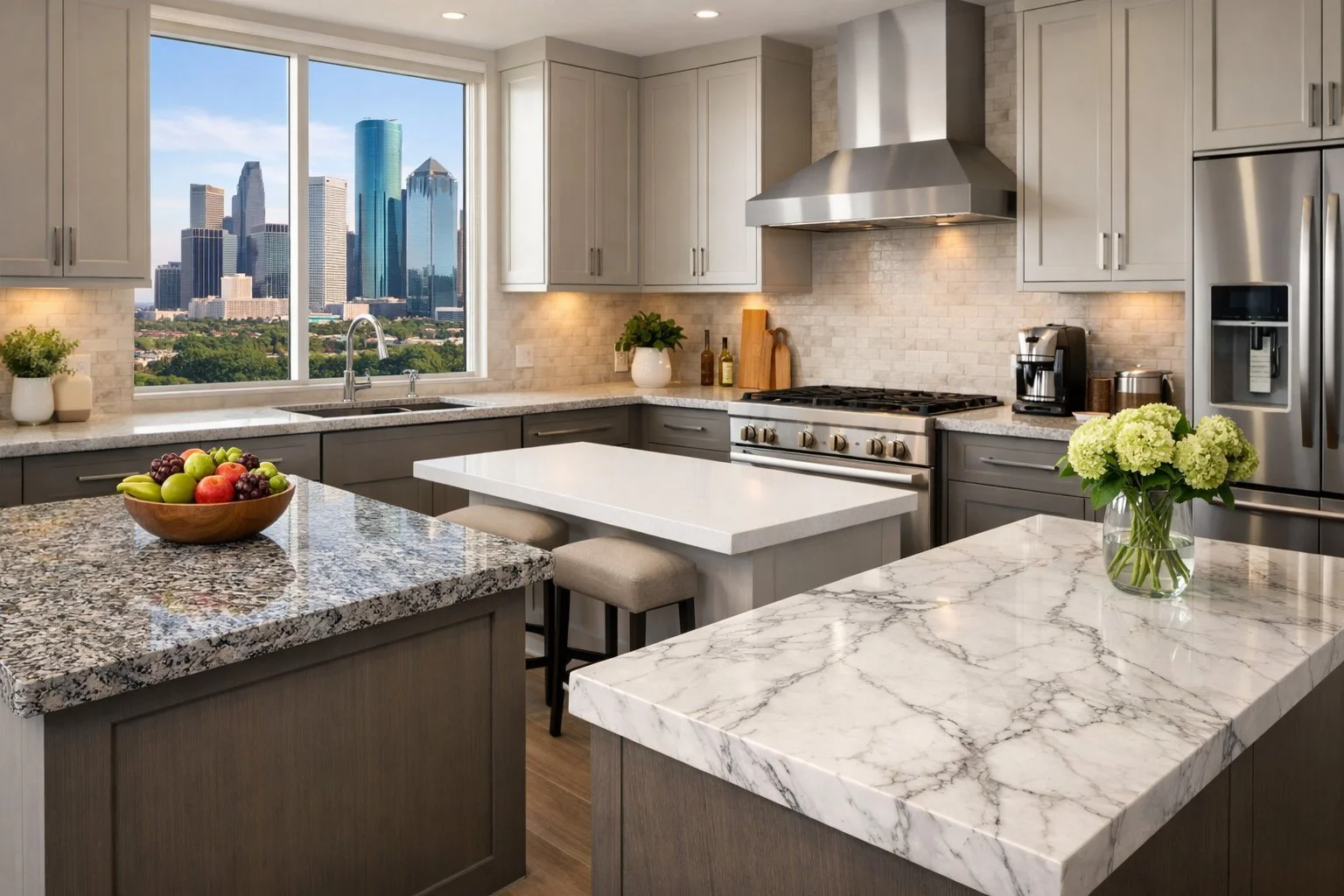
Picking a countertop isn’t just about what looks good. You’ve got to think about Houston’s weather, your daily routine, your design goals, and of course, your budget.
Assessing Your Kitchen's Needs and Houston's Climate
Houston’s heat and humidity can mess with some countertop materials more than you’d think. If a material isn’t sealed well, high humidity can cause warping or even mold.
Temperature swings, like the jump from your cool kitchen to the steamy outdoors, can stress certain materials. You’ll want something that handles moisture, especially since Houston gets over 50 inches of rain a year.
If your kitchen design has big windows or lots of sunlight, some countertop colors might fade over time. Natural stone and quartz usually hold up better under UV rays than laminate.
How much do you cook? If you’re always prepping with hot pans or acidic foods like tomatoes, you’ll want something that won’t get etched or damaged easily.
Durability, Maintenance, and Lifestyle Compatibility
Your daily habits matter more than you might think. If you’ve got a busy family, you’ll want a countertop that shrugs off scratches, stains, and chips.
Granite and quartz stand out for durability in Houston kitchens. They can take hot pots, knife marks, and spills like champs. Butcher block feels cozy but needs regular oiling and a bit more TLC.
Maintenance Requirements by Material:
Granite: Reseal every 1-2 years, clean with mild soap
Quartz: No sealing, wipes clean super easily
Marble: Reseal every 6 months, skip acidic cleaners
Laminate: Simple cleaning, but tough to fix chips
Butcher Block: Oil monthly, sand out stains
If you’d rather not fuss with sealing or special cleaners, quartz or laminate could save you some hassle.
Style, Color, and Kitchen Design Integration
Countertops really pull your kitchen’s look together. Light colors can make a small kitchen feel more open, while dark ones add contrast and drama.
Start by looking at your cabinets. Dark cabinets love a lighter countertop so the space doesn’t feel too heavy. Light cabinets? You can really go either way.
Natural stone veining can be stunning, but it might clash if you’ve already got busy floors or backsplashes. Sometimes, simple is better—solid colors or subtle patterns keep things calm.
Edge profiles matter too. Sleek, simple edges fit modern kitchens, while fancier edges like beveled or ogee feel more traditional. And, let’s be honest, the edge you pick can bump up the price.
Budget Planning for Countertops
Prices for countertops can swing a lot based on material, thickness, and edge details. Figure out your budget early so you don’t fall in love with something way out of reach.
Countertop material pricing varies depending on the type selected. Laminate countertops typically range from $20 to $50 per square foot installed. Butcher block generally falls between $50 and $100 per square foot installed. Granite ranges from $50 to $200 per square foot installed, while quartz usually costs between $60 and $150 per square foot installed. Marble is often priced between $75 and $250 per square foot installed. Concrete countertops typically range from $80 to $150 per square foot installed.
Installation usually adds $30-$100 per square foot, depending on how tricky the job is. Sink and cooktop cutouts cost extra. Fancy edges? Expect another $10-$30 per linear foot.
Think about long-term costs, too. Cheaper materials might need replacing sooner, while pricier ones can last for decades with less fuss. Don’t forget the cost of sealers, special cleaners, and repairs when you’re planning your Houston kitchen remodel.
Popular Houston Kitchen Countertop Materials and Options
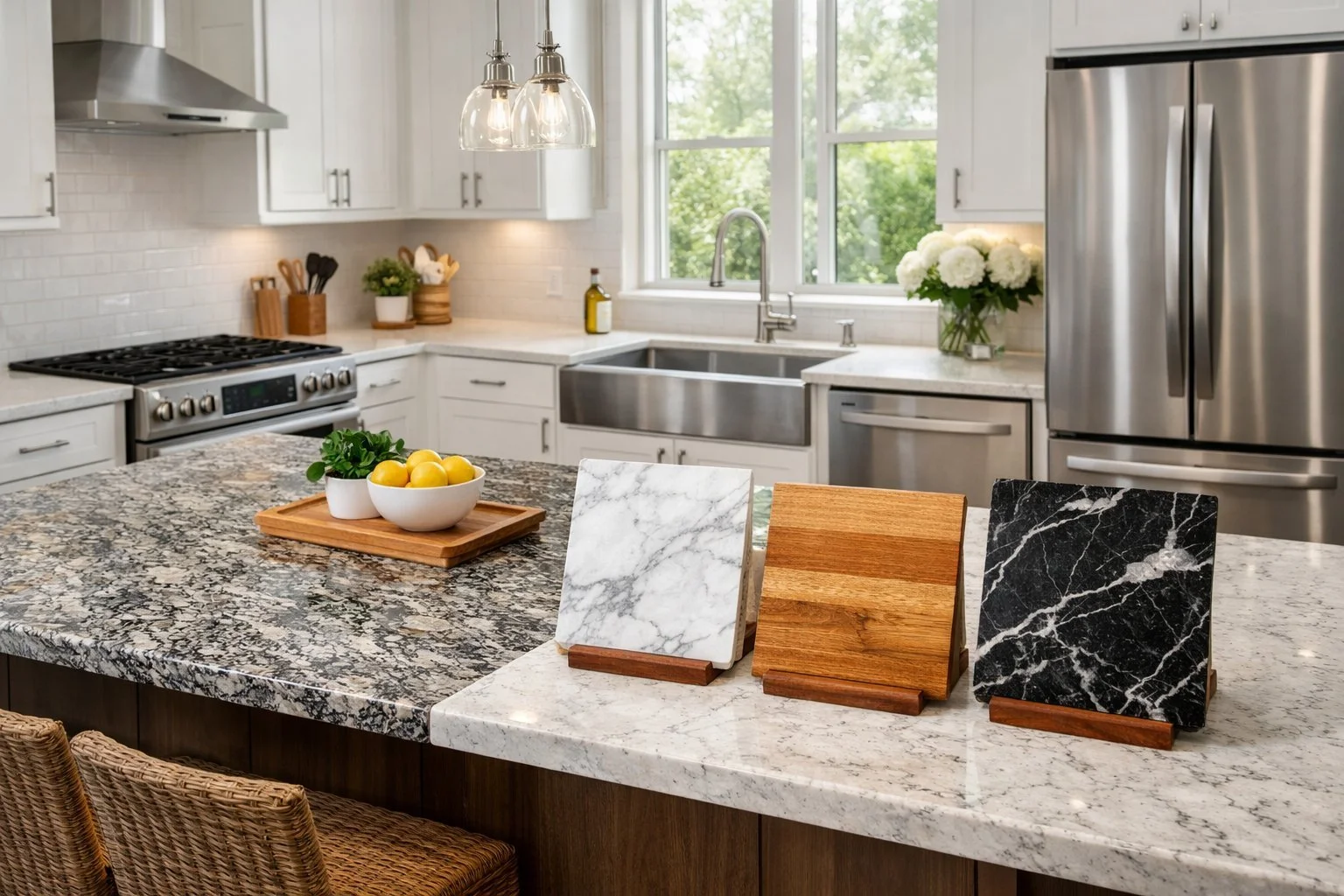
Houston homeowners can pick from all sorts of countertop materials to match their style, budget, and maintenance needs. Each one brings something different to the table.
Quartz Countertops: Low-Maintenance and Modern
Quartz countertops have become a go-to pick in Houston kitchens. Manufacturers blend natural quartz crystals with resin binders, making a tough, non-porous surface.
Quartz resists stains, scratches, and bacteria better than most natural stone. You won’t need to seal it, which saves you time and effort.
There’s a huge range of colors and patterns. Some look like real stone, others are bold and modern.
Quartz handles Houston’s humidity like a pro because it doesn’t soak up moisture. Spills just sit on top instead of soaking in.
Key Benefits:
No sealing needed
Stain and scratch resistant
Lots of pattern and color options
Heat safe up to 300°F
Granite Countertops: Natural Beauty for Houston Homes
Granite brings real stone beauty to your kitchen. Every slab is unique, with its own colors and patterns.
This stone is super hard, so it resists knife scratches and hot pans. You’ll need to seal it once or twice a year to keep stains out, but sealing only takes about an hour.
Granite fits busy Houston kitchens since it holds up to daily wear. You’ll find everything from light to dark colors.
Prices depend on how rare the color or pattern is. Common colors cost less, while exotic slabs get pricey.
Marble Countertops: Timeless Elegance and Considerations
Marble countertops look classic and upscale, with beautiful white and gray veining. They’re softer than granite, though, and scratch or stain more easily—especially if you spill something acidic.
You’ll need to seal marble often and wipe up spills right away. Some Houston homeowners use marble for baking stations or islands instead of the main prep area.
Over time, marble develops a patina. Some people love that lived-in look; others want their counters to stay flawless.
Maintenance Requirements:
Seal every 3-6 months
Clean spills fast
Use cutting boards
Skip acidic cleaners
Butcher Block and Wood Countertops: Warmth and Character
Wood countertops bring a cozy, natural feel to your kitchen. Butcher block is made from strips of wood glued together for a thick, sturdy surface.
Maple, oak, walnut, and cherry are all popular choices, each with its own color and grain. These counters need regular oiling to handle Houston’s climate—plan on food-safe mineral oil every 4-6 weeks at first, then monthly.
You can sand and refinish wood to erase scratches or stains, which helps them last longer. Just remember, water is the enemy—wipe up spills quickly and don’t let water sit.
Laminate Countertops: Versatility on a Budget
Laminate gives you a wallet-friendly way to update your kitchen. It’s basically a printed design layer sealed between protective layers, stuck onto a particle board base.
Modern laminate looks way more realistic than it used to. You can get styles that mimic stone, wood, or just go for a solid color.
It’s easy to clean with soap and water—no special products needed. Laminate resists stains, but hot pans and deep scratches can do real damage.
Price Range: $20-$50 per square foot installed—pretty hard to beat if you’re on a budget.
Solid Surface Countertops: Seamless Style
Solid surface counters are made from acrylic or polyester mixed with minerals. The color and pattern run all the way through.
One big win: seams are almost invisible. You can even get a sink molded right into the countertop for a smooth look.
If you scratch it, a pro can sand out the damage. That helps your counters stay looking fresh.
There are tons of colors and patterns. Solid surface is non-porous, so it shrugs off stains and bacteria without sealing.
The downside? It’s not as heat-resistant as stone. Always use hot pads or trivets.
Natural and Engineered Stone Countertops: Beyond Granite and Quartz
There are other stone options if you want something different. Soapstone is smooth and dark, and it develops character as it ages.
Quartzite, a natural stone, is even harder than granite. It looks like marble but handles stains and scratches better.
Limestone has a softer, rustic vibe. It needs more care than harder stones, but it’s unique.
If you want something eco-friendly, check out recycled glass composites. They blend crushed glass with resin for colorful, one-of-a-kind surfaces.
Each stone type has its own quirks and care requirements. It’s worth reading up before you commit to something less common.
Concrete, Tile, and Glass Countertops: Unique Choices
Concrete countertops let you get creative with shapes, colors, and even embedded objects. You’ll need to seal them to avoid stains, and they can crack if your house settles, but a good installer can help prevent that.
Tile countertops use ceramic or porcelain tiles set in mortar. You’ll need to keep the grout clean and sealed to avoid stains and germs.
Glass countertops feel modern and catch the light. You can go with recycled glass slabs or back-painted glass for a cool effect.
Considerations
Frequently Asked Questions
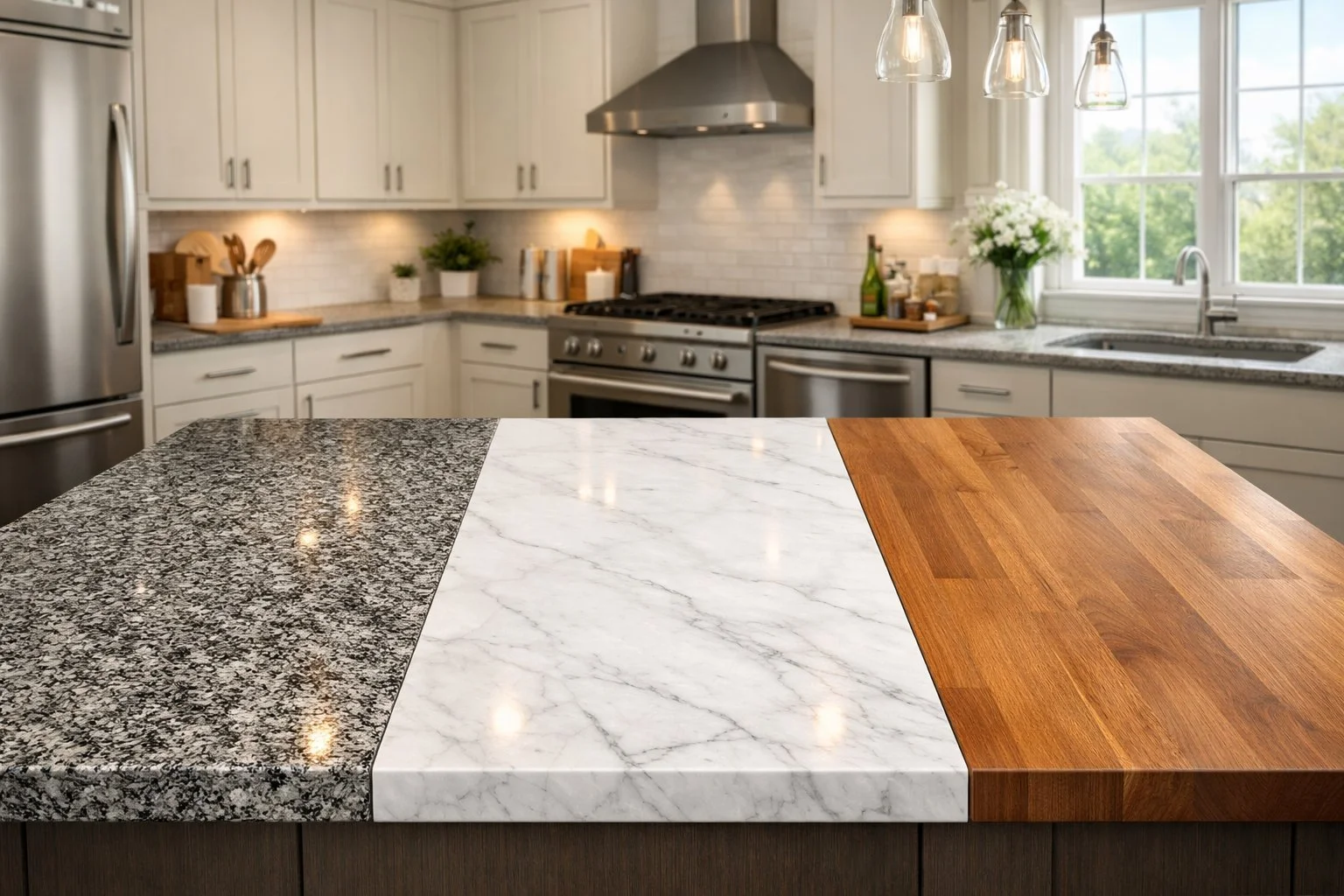
Picking kitchen countertops is all about finding the right mix of material properties, looks, durability, budget, and how much maintenance you’re willing to do. Don’t forget to think about heat and scratch resistance too.
What factors should I consider when selecting materials for my kitchen countertops?
Your budget pretty much sets the stage for which materials you can actually pick. Granite and quartz usually cost more than laminate or tile.
How do you use your kitchen? If you’re always cooking with hot pans, you’ll want heat-resistant counters. If you prep food right on the surface, go for something that resists scratches.
Maintenance matters, especially for busy families. Some folks don’t want to deal with sealing or special cleaners. Houston’s humidity can also affect how certain materials hold up over time.
How do I determine the best countertop color and texture to match my kitchen's design?
Light colors like white or beige make small kitchens look bigger. Darker shades add drama but show crumbs and dust more easily.
Look at your cabinet color first. Light cabinets pop with darker counters, and dark cabinets look great with lighter ones.
Texture makes a difference too. Polished surfaces bounce light around and feel modern. Honed or matte finishes hide fingerprints and water spots better.
What are the differences in durability among various countertop materials?
Granite is super tough and can last for decades if you take care of it. It resists scratches and heat, but the edges can chip if you bang something hard against them.
Quartz is just as durable and doesn’t need sealing. It’s less likely to chip than natural stone, but extreme heat can mess with the resin.
Laminate is cheaper but wears out faster. It can scratch, burn, and peel at the seams. Solid surface materials resist some damage but can scratch more easily than stone.
How can I assess the cost-effectiveness of different countertop options for my kitchen?
First, figure out the total square footage you’ll need, including the backsplash. Most places price materials by the square foot, and installation usually tacks on another 30-50% to material costs.
Granite usually lands between $40 and $100 per square foot installed. Quartz tends to be a bit pricier, running $50 to $120 per square foot.
If you’re on a budget, laminate starts at $20 and goes up to $50 per square foot. Marble? That can go over $100 per square foot, so it’s definitely a splurge.
Don’t forget about long-term costs. Cheaper materials might seem like a deal, but you could end up replacing them sooner. Some stones also rack up maintenance costs, like sealing, over the years.
What maintenance requirements should I expect with different types of kitchen countertops?
Granite needs sealing once or twice a year to keep stains away. Wipe up spills quickly and use a cutting board, unless you like scratches.
Quartz is pretty chill when it comes to maintenance. You don’t have to seal it, just wipe it down with soap and water. Skip the harsh cleaners though—they can dull the finish.
Laminate only needs a quick clean with mild soap. Try to keep water away from the seams, or you might see some swelling. Marble is high-maintenance, honestly. You’ll need to clean up spills right away and seal it often.
How do the most popular countertop materials compare in terms of heat and scratch resistance?
Granite stands up to hot pans without a problem. You can usually set hot cookware right on the surface, no trivet needed.
Knives don’t faze granite much either. It shrugs off scratches better than most other options.
Quartz can handle some heat, but don’t push your luck with super hot pans. If you want to play it safe, always use a trivet or hot pad.
It resists scratches pretty well, though granite does a better job in that department.
Laminate just doesn’t get along with heat. Hot pans can burn or even melt it.
Sharp knives scratch laminate easily, and even regular cutting can leave marks.
Marble’s a bit of a mixed bag. It deals with heat alright, but it scratches quickly and stains if you spill acidic stuff like lemon juice.